Wooden Pretend Coffee Machine: Toddler Role-Play Skills
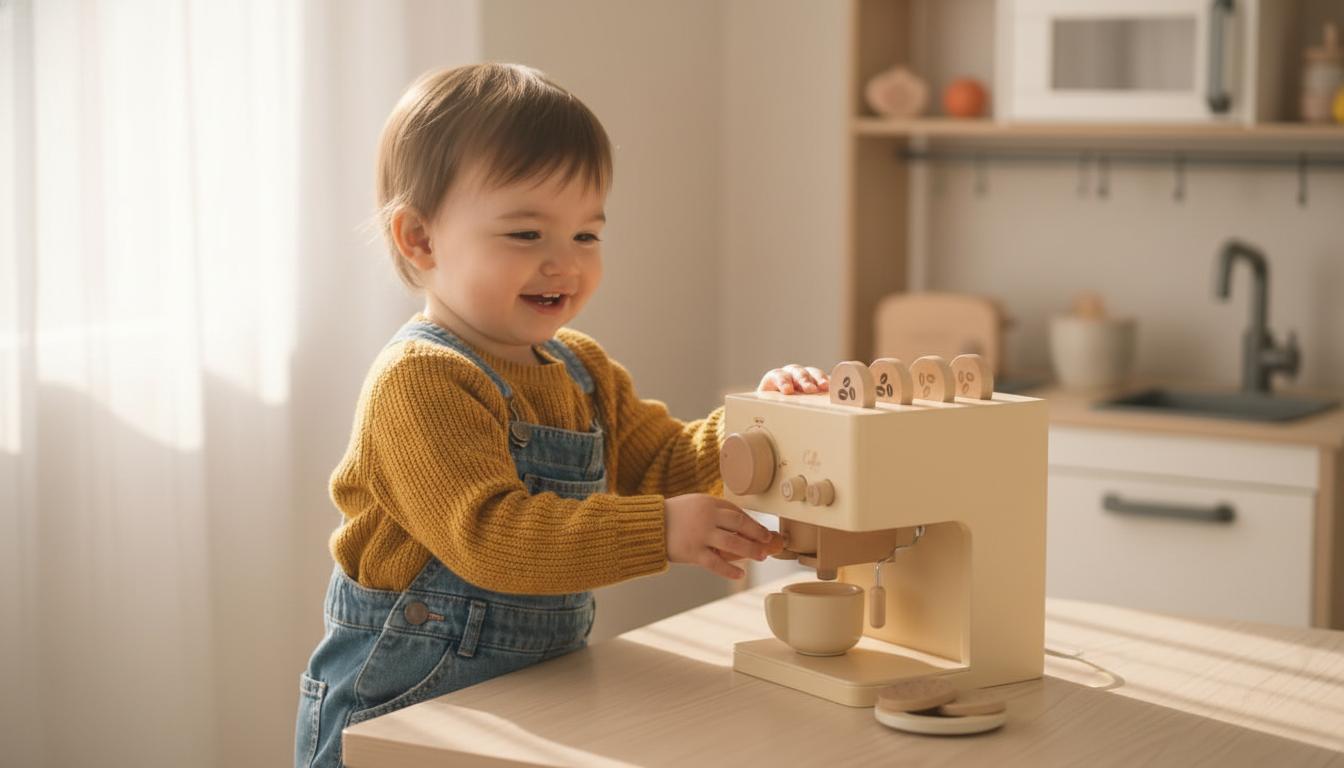
Wooden Pretend Play Coffee Machine for Toddlers: Role-Play Learning Through Everyday Routines
A wooden coffee machine play set turns a familiar daily ritual into hands-on make-believe that supports language, social skills, and early problem-solving. With durable materials and simple, repeatable steps (choose a drink, “brew,” serve, clean up), toddlers and preschoolers can practice turn-taking, following sequences, and imaginative storytelling—solo or with friends and family.
Play experts continue to emphasize that open-ended, child-led play supports healthy development. For more on why pretend play matters, see the American Academy of Pediatrics guidance on the power of play and NAEYC’s overview of play and learning.
Why a coffee shop play set keeps kids engaged
- Everyday routine play: children already understand “order, make, serve,” so they can start pretending right away.
- Open-ended stories: café, kitchen, restaurant, drive-through, and “morning at home” scenarios adapt to different ages.
- Repeatable actions support focus: pressing, turning, placing cups, and serving help build longer attention spans through play.
- Great for shared play: siblings and playmates can naturally swap roles (barista/customer) without complex rules.
Learning benefits for toddlers and preschoolers
- Language growth: practice greetings, polite phrases, menu words, and simple conversations (“What would you like?” “Here you go.”).
- Early math concepts: counting cups, sorting pretend ingredients, and understanding “more/less” when serving.
- Sequence and memory: follow steps from order to preparation to serving, reinforcing beginning–middle–end thinking.
- Fine motor development: grasping small accessories, aligning pieces, twisting knobs, and placing items carefully.
- Social-emotional skills: taking turns, handling “wait time,” and role-playing kindness and helpfulness.
Because the routine repeats, kids get plenty of “safe practice” with conversation and self-regulation. The goal isn’t to perform perfectly; it’s to rehearse real-world skills in a low-pressure, playful way.
What to look for in a wooden role-play coffee machine
- Smooth edges and sturdy construction: look for well-finished wood and stable parts that sit firmly on the floor or table.
- Easy-to-use controls: knobs and buttons should be simple enough for toddlers to operate without frustration.
- Accessory variety: cups, pods, spoons, milk/sugar pieces, and a menu card add more ways to play and learn.
- Storage-friendly design: a compact footprint and places to keep accessories reduce clutter and make cleanup part of the routine.
- Age-appropriate piece size: larger pieces are easier for little hands; very small parts are better for older preschoolers with supervision.
A helpful rule of thumb: the best sets invite kids to “do the steps” again and again without needing batteries, complicated instructions, or adult-led scripts.
Skill-building play ideas (5-minute setups)
- Morning café routine: child “opens” the shop, takes a simple order, and serves a caregiver—repeat with slight variations to build vocabulary.
- Color and shape sorting: group accessories by color/shape, then “restock” the coffee station.
- Counting game: serve 1–5 cups to stuffed animals; count out loud and match to “orders.”
- Polite words practice: add a rule that every order includes “please” and “thank you.”
- Clean-up closing time: pretend wipe-down and putting pieces away builds responsibility and transitions smoothly to real-life cleanup.
To keep it calm and sustainable, set a tiny “start line”: one cup on the counter and one pretend pod nearby. Kids often expand the scene on their own once the first action feels clear.
Quick guide: matching play to age and development
Younger toddlers typically enjoy the sensory-motor part (pressing, turning, placing). As kids grow, they stretch into multi-step routines, longer dialogue, and cooperative play. Supervision is useful when a set includes smaller accessories or when play becomes more energetic with multiple children.
Age-appropriate ways to play
| Age range | Best play style | Skills supported | Adult support |
|---|---|---|---|
| 1–2 years | Copying simple actions (press/turn/serve) | Fine motor, attention, first words | Model phrases and steps; keep play short |
| 2–3 years | Short role-play with turn-taking | Language, sequencing, social skills | Prompt polite phrases; help with sharing |
| 3–5 years | Full café stories with menus and “payments” | Imagination, early math, cooperation | Join as a customer; encourage longer stories |
Featured toy: Wooden Pretend Play Coffee Machine
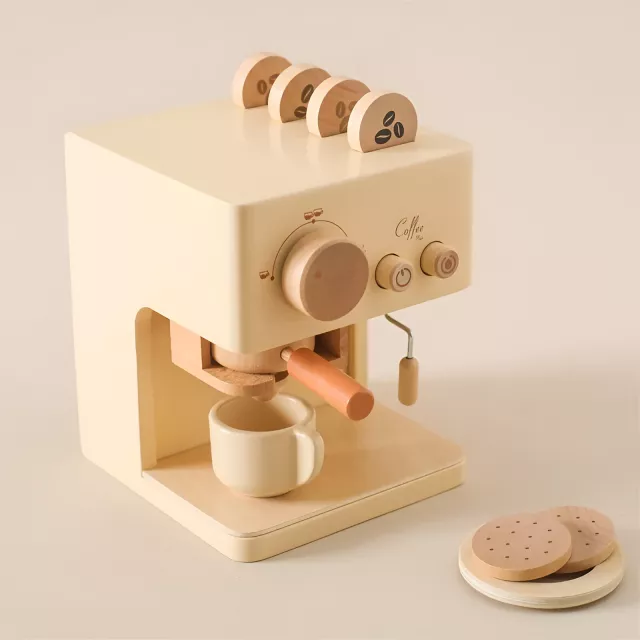
For families building a play kitchen corner or adding a new “real-life routine” to pretend time, the Wooden Pretend Play Coffee Machine – Educational Role Play Toy for Toddlers is designed for repeatable role-play learning.
More in-stock finds (giftable, practical picks)
- Twin Size Upholstered Bed with LED Lights and Crown Headboard (a fun bedroom upgrade that can make bedtime routines feel more inviting).
- Men’s Genuine Leather Cowboy Belt with Copper Buckle for Jeans (a classic accessory that makes a solid gift for parents, too).
Care, safety, and setup tips
FAQ
What age is a wooden pretend coffee machine best for?
Most wooden pretend coffee machines work well from toddler age through the preschool years (roughly 1–5). Younger toddlers often enjoy pressing, turning, and serving with adult modeling, while older preschoolers add longer café stories; supervise if the set includes smaller accessories.
How does pretend café play support learning?
Pretend café play builds language through greetings and simple dialogue, supports social skills through turn-taking, and strengthens sequencing as kids follow an order-brew-serve routine. Handling cups and accessories also boosts fine-motor control, while counting and sorting introduce early math ideas.
How can pretend play reduce screen time without battles?
Use a short daily routine (5–10 minutes) by keeping a small “coffee corner” ready to go, then joining briefly as a customer before letting your child run the script independently. Predictable, repeatable play sequences make it easier for kids to choose play without needing constant adult direction.














Leave a comment