Car Visor Storage Bag: Quick Sun Visor Organizer Tips
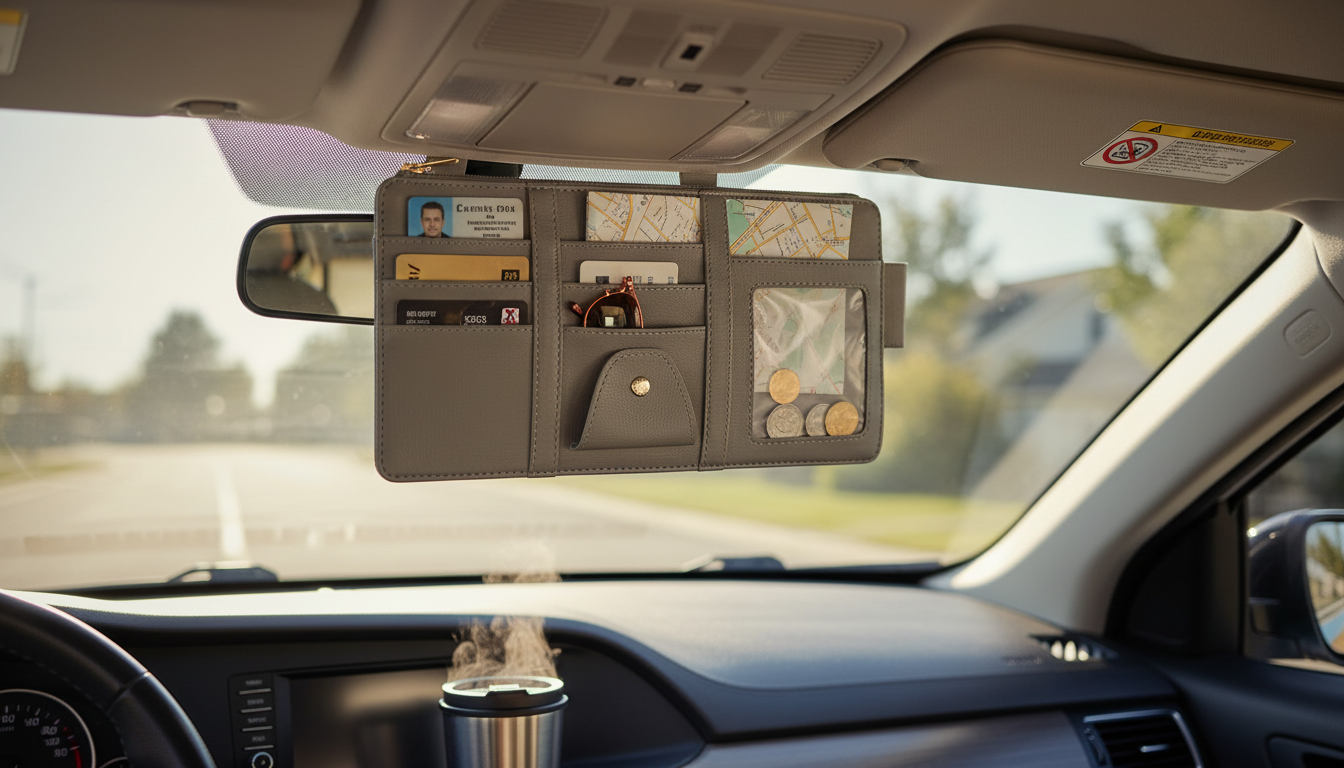
Car Visor Storage Bag: A Simple Sun Visor Organizer for SUV, RV, Truck & Small Cars
A visor organizer adds quick-access storage right above the driver and passenger seats—helpful for keeping small essentials visible, reachable, and off the dashboard. Done right, it creates a predictable “home base” for the items you reach for at the start of a drive, at toll booths, or when parking—without turning your console into a catch-all. Below are practical use cases, what to store, fit considerations across SUVs, RVs, trucks, and compact cars, plus setup and care tips so a visor storage bag stays secure and doesn’t interfere with mirrors, lights, or safe driving.
Why a visor organizer helps on everyday drives and long trips
Small in-cabin clutter has a way of spreading: sunglasses end up in the cupholder, parking slips slide under the passenger seat, and wipes migrate to the door pocket. A visor organizer keeps frequently used items in a consistent spot, which can reduce rummaging while seated and help you keep your attention where it belongs.
- Keeps common essentials (parking cards, sunglasses, wipes) easy to spot and reach, especially when you’re buckled in.
- Clears clutter from cupholders, center consoles, and dashboards—useful when traveling with passengers or using the car for work.
- Creates a “grab zone” for toll tags, garage remotes, and documents that are often needed at the start or end of a drive.
- Works well for road trips and RV travel, where larger storage fills quickly and small items can disappear into bigger compartments.
For more on why keeping distractions down matters, see guidance from NHTSA on distracted driving and AAA’s distracted driving resources.
What to store: smart items for each seat position
A visor storage bag works best when it’s stocked with light, flat, frequently used items. Think of it as an “access panel,” not a mini glovebox. Loading it thoughtfully also helps the visor keep its normal position without drooping.
Driver-side ideas
- Sunglasses (preferably in a slim soft case)
- Small flashlight
- Microfiber cloth for lenses/screens
- Parking pass or garage ticket
- Gas/rewards card
- Compact tire-pressure gauge
Passenger-side ideas
- Travel tissues, hand sanitizer, or wet wipes
- Phone cable (short, coiled, or Velcro-tied)
- Non-melting snacks (avoid chocolate/candy in summer)
- Small medication pouch (kept non-child-accessible if kids ride along)
Document handling and what to avoid
Registration and insurance paperwork should be kept in a slim sleeve so papers don’t fold, tear, or slide out. Avoid stacking thick booklets, hard objects, or anything heavy that could fall. Also skip items that can melt or leak in heat (certain gels, adhesives, or loosely capped liquids).
| Pocket/Area | Good Fits | Notes for safer use |
|---|---|---|
| Flat sleeve pocket | Parking pass, registration sleeve, insurance card copy | Keep edges flush so papers don’t snag when flipping the visor |
| Mesh/elastic pocket | Sunglasses, wipes pack, small power bank | Avoid overstuffing; bulk can push the visor down |
| Pen loop/slot | Pen, tire tread gauge | Choose capped pens to prevent ink marks in heat |
| Card slots | Toll card, fuel rewards card, emergency contact card | Rotate cards occasionally so they don’t warp in summer heat |
Fit across SUV, RV, truck, and small cars
Visor size and clearance vary more than most drivers expect. Trucks and many SUVs tend to have larger visors with a bit more “hang space,” while compact cars may have shorter visors and tighter clearance to the headliner. Before committing to a fully loaded setup, do a quick compatibility check with your specific visor features.
- Visor mirrors and lights: If your visor includes a vanity mirror, a sliding mirror cover, or built-in lights, make sure the organizer doesn’t cover switches or block the mirror from opening.
- Labels and warnings: Airbag warning labels should remain visible and readable.
- Rearview mirror sightline: With the visor down and the organizer installed, confirm it doesn’t crowd the rearview mirror area or create a visual obstruction.
- Driver vs. passenger differences: Some vehicles pack more features into the passenger visor, so test fit both sides if you plan to run a two-organizer setup.
Installation and setup that stays put
Keeping it tidy: maintenance and heat-care tips
A practical option for added overhead storage
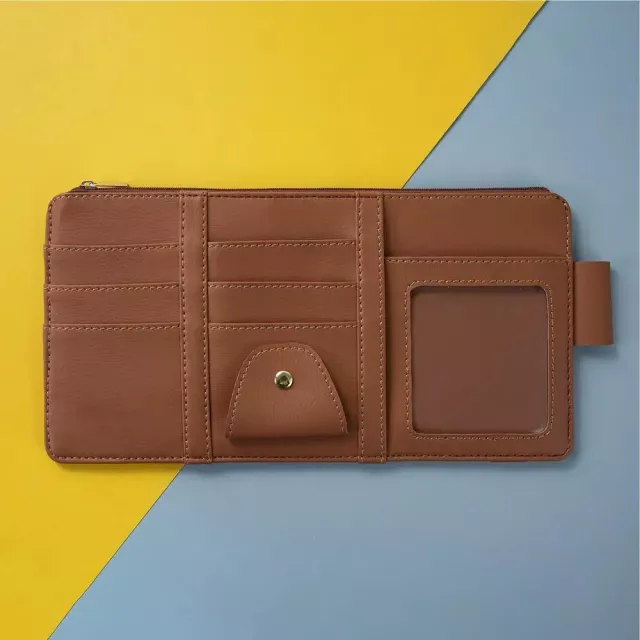
- Car Visor Storage Bag | Auto Sun Visor Organizer for SUV, RV, Truck & Small Cars is a compact, overhead “quick-access” solution for daily carry items, travel documents, and small car-care basics.
- For road-trip comfort add-ons that don’t clutter pockets, a sturdy accessory like the Men’s Genuine Leather Cowboy Belt with Copper Buckle for Jeans can be a dependable grab-and-go piece when you’re hopping between stops.
- If pets ride along, keeping grooming basics ready can help after hikes or campground days; consider the Large Dog Slicker Brush & Comb Set for Doodles, Poodles and Long Coats as an easy kit to stash for weekend travel.
FAQ
Will a visor organizer block the vanity mirror or visor lights?
It depends on how your visor is equipped and where the organizer sits. After installing, open the mirror cover and test any lights or switches to confirm everything remains usable, and avoid covering any safety labels.
Is it safe to store sunglasses and documents on the visor?
It can be safe when the organizer isn’t overloaded and doesn’t obstruct your vision or the rearview mirror area. Stick to light, soft items, and keep papers in a slim sleeve so they don’t slide out when the visor is flipped.
How do you stop a visor storage bag from sagging or swinging?
Tighten straps evenly, reduce bulk, and spread items across pockets to keep weight balanced. Re-check strap tension after a few days of driving, since straps can settle as the material flexes.














Leave a comment