Propane Tankless Water Heaters: Sizing, Venting & Care
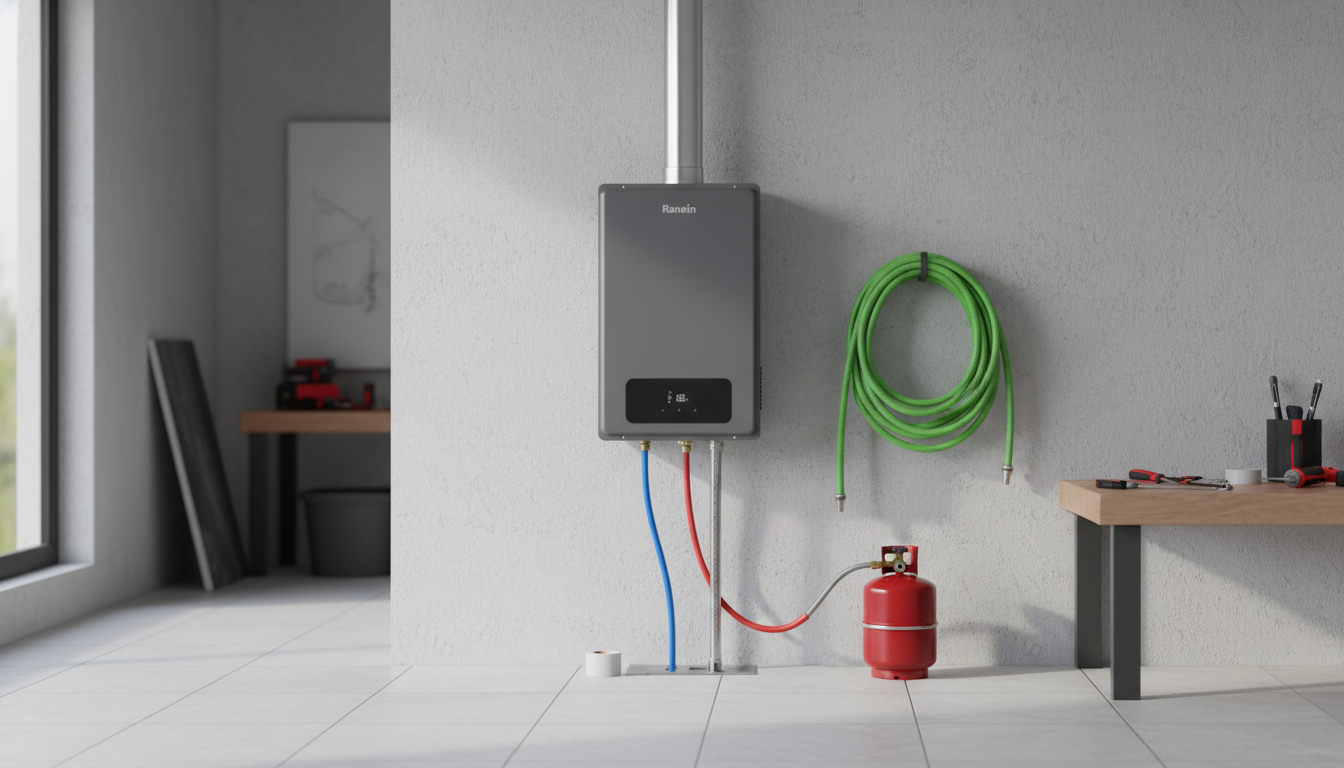
Propane Gas Tankless Water Heaters: Instant Hot Water for Homes, Cabins, and Off-Grid Setups
A propane tankless water heater warms water only when a tap is opened, delivering on-demand hot water without storing it in a bulky tank. For propane-powered homes and remote properties, it can reduce standby energy loss and free up space—provided the unit is sized correctly and installed with proper ventilation, gas supply, and safety controls.
How Propane Tankless Water Heating Works
Tankless systems are built around one simple idea: heat water as it moves through the unit, not hours before you need it. When you open a hot-water fixture, a flow sensor detects demand, the burner ignites, and a heat exchanger transfers propane heat into the passing water.
To keep outlet temperature steady, most modern units modulate the burner (increasing or decreasing flame intensity) and may adjust flow to maintain your setpoint. Even though propane supplies the heat, most models still need electricity for ignition, control boards, sensors, and safety shutoffs—so plan for a standard outlet, a dedicated circuit, or an off-grid power solution where applicable.
Real-world performance depends on incoming water temperature, adequate gas pressure under load, and the venting design. If any of those inputs are constrained, the heater may reduce flow to maintain temperature, or it may struggle to keep up during peak demand.
When a Propane Tankless Unit Makes Sense
Propane tankless water heaters are especially practical in properties that don’t have natural gas service and already rely on propane for cooking, space heating, or generators. They’re also a strong match for cabins, workshops, ADUs, and smaller homes where mechanical-room space is limited and you’d rather avoid a large storage tank.
Intermittent-use properties can benefit because water is heated only when needed, minimizing standby losses associated with keeping a tank hot 24/7. And for households with longer draws—like showers, laundry, and back-to-back use—tankless can feel virtually endless, as long as the unit is sized for your peak flow rate at your local temperature rise.
For a deeper overview of how demand-type heaters differ from tanks, see the U.S. Department of Energy guidance: Tankless or Demand-Type Water Heaters.
Sizing Basics: Flow Rate, Temperature Rise, and Real-World Demand
Sizing is where most satisfaction (or frustration) comes from. Two numbers matter most: how many gallons per minute (GPM) you need at once, and how much the unit must raise the water temperature to hit your setpoint.
- Flow rate (GPM): Add up fixtures that may run simultaneously. A single shower plus a bathroom sink can be fine—until someone starts a second shower or the washing machine fills.
- Temperature rise: This is your target outlet temperature minus incoming cold-water temperature. Colder incoming water requires more burner output to maintain the same GPM.
- Undersizing symptoms: Lukewarm water during overlaps, fluctuating temperature, or reduced flow as the unit “throttles” to protect the setpoint.
- Don’t shop by best-case labels: Advertised GPM is often at a mild temperature rise. Match performance to your conditions.
| Scenario | What to estimate | Why it matters |
|---|---|---|
| Single shower + faucet | Combined GPM and desired temp | Small overlaps can push a marginal unit into throttling |
| Two showers at once | Peak GPM during morning/evening rush | Most common comfort complaint is insufficient peak capacity |
| Cold climate incoming water | Higher temperature rise | More burner output needed to maintain setpoint at the same GPM |
| Long piping runs | Wait time and line heat loss | May need recirculation or point-of-use support for faster delivery |
Water-efficient fixtures can also change the math by reducing required GPM without sacrificing comfort. The EPA’s WaterSense program is a useful reference for fixture efficiency: EPA WaterSense.
Venting, Air Supply, and Placement
Propane Supply, Regulators, and Gas Line Considerations
For safety and accepted practices around LP-gas systems, NFPA 58 is a widely referenced standard (overview here): NFPA — LP-Gas Code (NFPA 58).
Water Quality, Maintenance, and Longevity
Safety Features and Code Basics
Product Spotlight: Propane Gas Tankless Water Heater
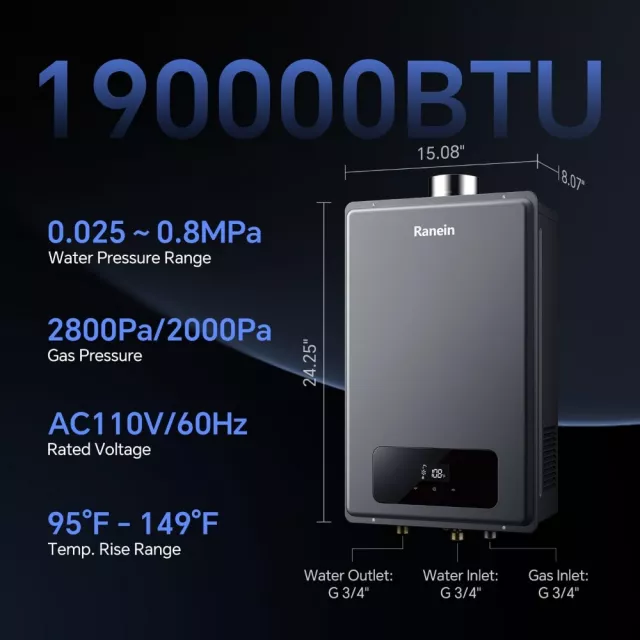
If you’re ready to move from stored hot water to on-demand performance, the Propane Gas Tankless Water Heater is a propane-powered option designed to deliver hot water as needed while reducing the footprint of a traditional tank setup. The best outcomes come from matching capacity to your peak household GPM at your local incoming-water temperature, then planning for proper venting/placement, propane supply sizing, and routine descaling based on water hardness.
| Item | Value |
|---|---|
| Product | Propane Gas Tankless Water Heater |
| Price | 955.80 USD |
| Availability | In stock |
| Category | Bathroom |
| Product page | View product |
For cabin builds and compact homes, it can also help to reclaim interior space for storage or furnishings. If you’re upgrading a small bedroom while optimizing utility space, consider pairing a mechanical-room refresh with a streamlined sleeping setup like the Twin Size Upholstered Bed with LED Lights and Crown Headboard.
FAQ
Can a propane tankless water heater run two showers at the same time?
It depends on the unit’s flow rating at your required temperature rise. Add the GPM of both showers and compare that to the heater’s performance at your incoming water temperature—if it’s undersized, the unit may reduce flow or deliver cooler water during overlap.
Do propane tankless water heaters need electricity?
Most models need electricity for ignition, control boards, and safety sensors. Off-grid setups often use a small generator, battery/inverter, or dedicated power supply, depending on the heater’s electrical requirements.
How often should a tankless water heater be flushed?
It varies by water hardness and usage, but many households flush annually. In hard-water areas, more frequent descaling may be needed to prevent scale buildup that can reduce flow and cause temperature instability.














Leave a comment