Mirror Puzzle Busy Board: Calm Montessori Skill Play
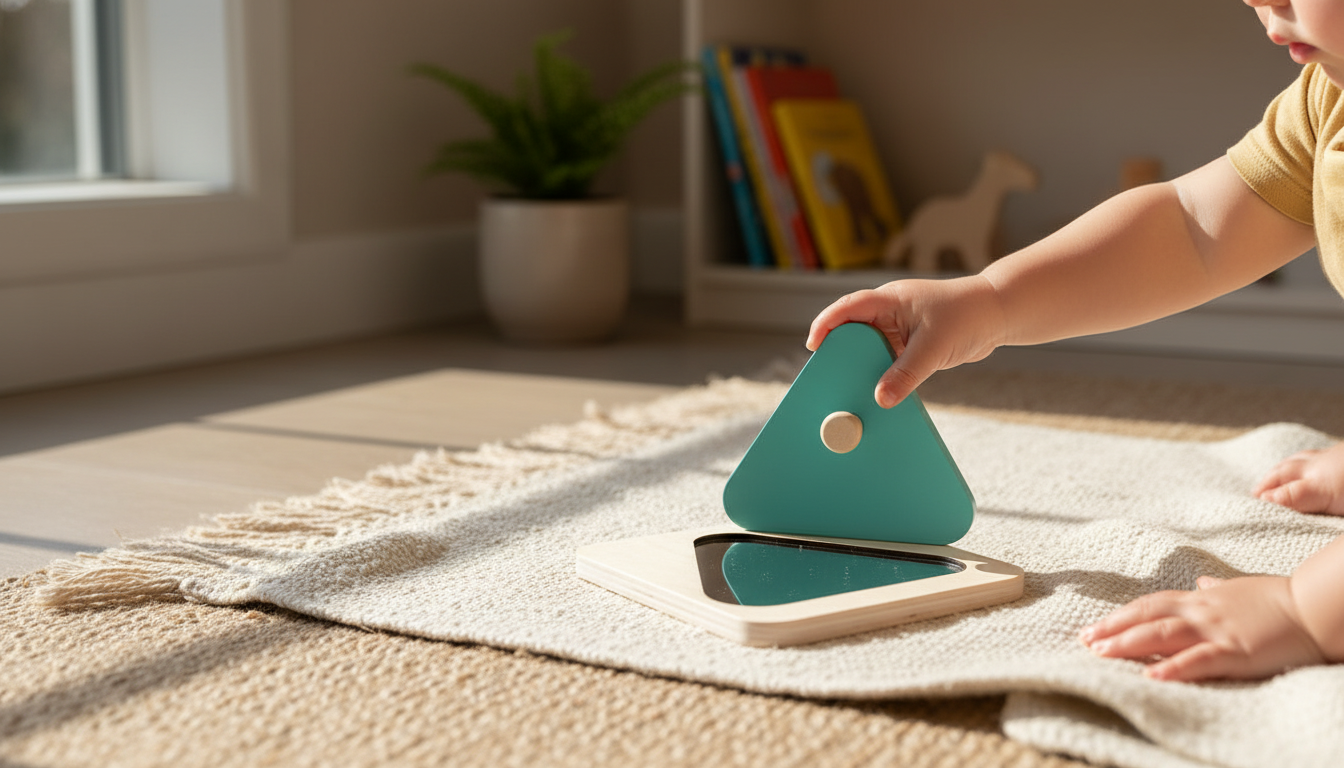
Montessori Wooden Mirror Puzzle Busy Board for Early Learning & Sensory Play
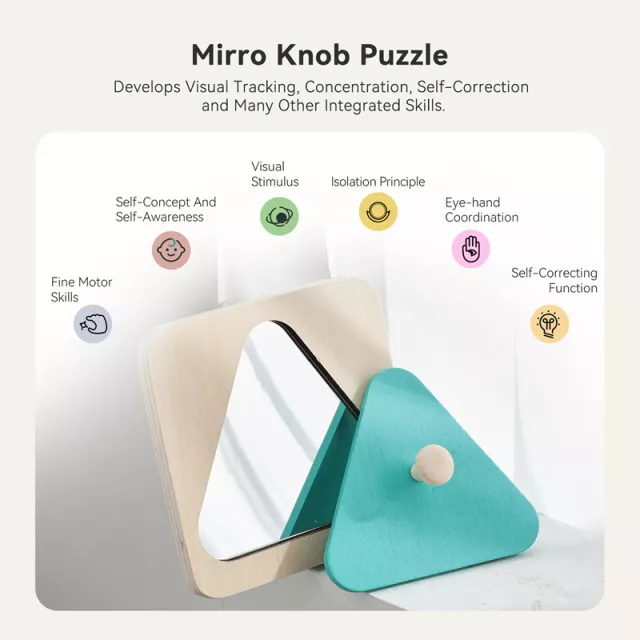
A wooden busy board with a child-safe mirror and simple puzzle elements offers a focused way to support hands-on exploration. It encourages quiet concentration, finger strength, and early problem-solving while giving little ones a chance to notice their own reflection during play. For families building a small “calm corner” at home, a mirror-and-puzzle board can be a simple, screen-free option that fits into everyday routines. For more guidance, see Effective Nature-Based Outdoor Play and Learning Environments for ….
For general guidance on age-appropriate development and toy safety, it can help to compare your child’s interests with reputable resources like the CDC developmental milestones and the AAP’s tips on selecting safe toys. For further reading, see Vanplay Montessori Busy Board for Toddlers.
What This Busy Board Helps Children Practice
Busy boards work best when the activities are clear and repeatable. With a mirror element and simple puzzle tasks, children can practice multiple early skills without needing complicated instructions.
- Fine-motor control: grasping, pinching, rotating, and placing pieces with more precision over time
- Hand–eye coordination: aligning puzzle parts and tracking movement across the board
- Early problem-solving: trying different orientations, learning cause-and-effect, and persisting through small challenges
- Sensory exploration: touching smooth wood surfaces and visually engaging with a mirror element
- Attention and self-regulation: building longer stretches of calm, independent play in short daily sessions
Skills Supported by Common Busy Board Activities
| Activity | Primary skill | How to scaffold | When to step back |
|---|---|---|---|
| Mirror exploration | Visual tracking and self-recognition | Name facial features; play peekaboo; keep sessions brief | Child returns to the mirror independently and stays engaged without prompting |
| Puzzle fitting | Spatial reasoning and problem-solving | Offer one piece at a time; demonstrate matching edges once | Child rotates pieces and tests options without frustration |
| Grasping/removing pieces | Grip strength and finger isolation | Place pieces slightly lifted; encourage pincer grasp | Child uses fingertips instead of whole-hand raking |
| Simple sequencing (put in, take out, repeat) | Working memory and routine building | Use a short rhythm (in–press–out); count aloud to three | Child repeats the sequence steadily and varies it creatively |
A Simple Setup for Calm, Independent Play
Small environment tweaks can make the board feel more inviting and less overwhelming—especially for toddlers who get distracted easily.
- Choose a safe play spot: a flat surface, stable seating (or floor play), and good natural light for mirror use
- Start with short windows: 5–10 minutes, then gradually extend as interest grows
- Offer one clear invitation: place the board within reach and let the child initiate interaction
- Reduce background distractions: fewer toys nearby can increase focus and reduce overwhelm
- Rotate activities: pair the board with a small book basket or soft blocks to keep play varied without clutter
If your child is new to independent play, you can sit nearby and narrate what they’re doing (“You turned it—now it fits!”), then slowly fade your involvement. Gentle “support, then step back” tends to build confidence without turning play into a lesson.
Safety, Materials, and Care Tips
- Supervision matters: busy boards are learning tools and should be used with an attentive adult nearby
- Check surfaces regularly: look for rough edges, loose parts, or cracks; stop use if anything becomes unstable
- Mirror safety: confirm the mirror is designed for children (shatter-resistant) and keep it clean for clear reflection
- Cleaning routine: wipe with a slightly damp cloth; avoid soaking wood; dry promptly
- Storage: keep in a dry place and avoid prolonged direct sunlight to protect the finish and longevity
For play ideas that support early learning through everyday interaction, Zero to Three’s overview of play and learning can be a helpful reference when you’re choosing simple, repeatable activities.
Who It’s Great For (and When to Wait)
Everyday Ways to Extend Learning with the Board
Product Snapshot
If you’re looking for a budget-friendly way to add focused, hands-on play to your routine, the Montessori Wooden Mirror Puzzle Busy Board for Early Learning & Sensory Play is currently in stock and designed for short daily sessions that prioritize calm focus, sensory exploration, and early problem-solving.
| Item | Price | Availability | Best use |
|---|---|---|---|
| Montessori Wooden Mirror Puzzle Busy Board for Early Learning & Sensory Play | $8.51 (USD) | In stock | Short, consistent play sessions for fine-motor practice and quiet concentration |
To round out a child’s calm play area, a cozy and kid-friendly room setup can also support routines like reading and quiet play. If you’re updating a bedroom space, the Twin Size Upholstered Bed with LED Lights and Crown Headboard is another in-stock option to consider for a comfortable, dedicated rest-and-reset zone.
FAQ
What age is a wooden mirror busy board best for?
Many families introduce a mirror busy board during the toddler years (around 12 months and up) and continue through preschool, depending on interest and readiness. Choose supervised play and prioritize boards with child-safe, shatter-resistant mirror materials.
How long should a child play with a busy board each day?
Start with 5–10 minutes a day and build up gradually as attention span grows. It’s better to stop while your child is still enjoying it than to push until frustration.
How should a wooden busy board be cleaned and stored?
Wipe it with a slightly damp cloth, avoid soaking the wood, and dry it promptly. Store it in a dry place and do quick routine checks for loose parts or rough edges before play.










Leave a comment