52-Pint Smart Dehumidifier for Basements & Mixed Spaces
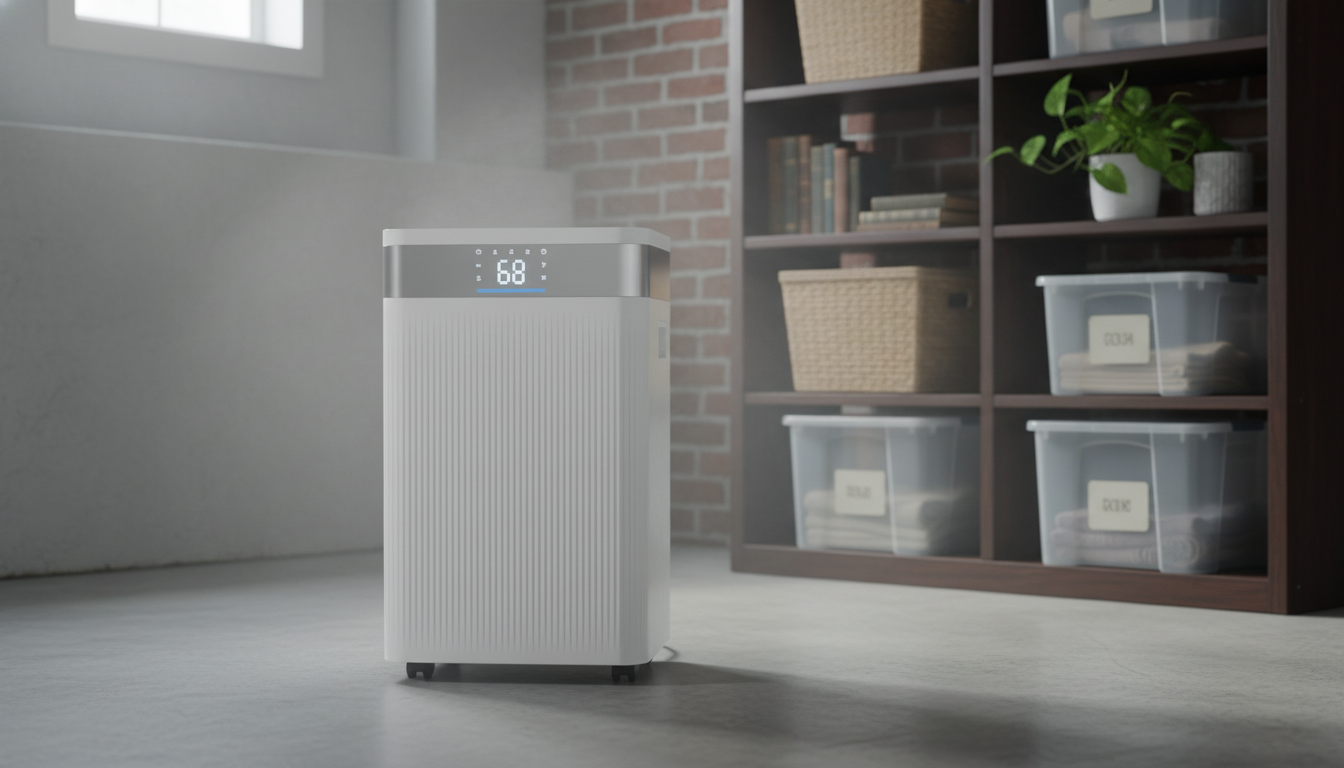
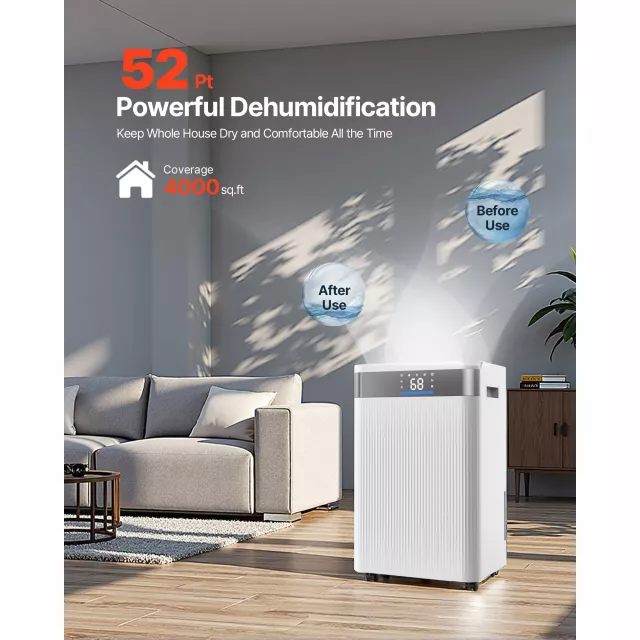
52-Pint Commercial & Home Dehumidifier with Smart Humidity Control
Excess humidity can lead to musty odors, damp walls, condensation on windows, and conditions that encourage mold growth. A 52-pint dehumidifier with smart humidity control is designed to pull significant moisture from the air while automatically maintaining a comfortable target level—useful for basements, laundry rooms, garages, and busy mixed-use spaces where humidity swings throughout the day.
What this dehumidifier is built to handle
A 52-pint unit is a practical step up for spaces where dampness is more than a once-in-a-while problem. It’s meant for areas that hold onto moisture—especially when ventilation is limited or when daily routines add water vapor to the air.
- Designed for higher-moisture areas where smaller units struggle: basements, storage rooms, workshops, and larger living spaces with frequent cooking, showers, or laundry.
- Smart humidity control aims to keep indoor air within a set range instead of running nonstop, helping stabilize comfort and reduce dampness cycles.
- Suitable for both residential and light commercial environments where moisture control supports materials, inventory, and indoor air quality.
If mold is already visible or a flood has occurred, follow health and safety guidance from authoritative resources like the EPA’s mold cleanup recommendations and address the moisture source before relying on any appliance alone.
Quick specs and where it fits best
“52-pint” refers to a high moisture removal class intended for sustained humidity reduction—ideal for persistent dampness rather than brief spot-drying. In below-grade areas, this capacity can help keep relative humidity steady through weather changes and daily activity spikes.
- 52-pint moisture removal class: practical for sustained humidity reduction rather than occasional spot-drying.
- Good match for damp-prone zones: below-grade rooms, poorly ventilated areas, and spaces with recurring condensation.
- Smart control is most valuable in climates with day/night humidity shifts or buildings with intermittent occupancy.
At-a-glance guide: capacity, typical rooms, and goals
| Feature | What it means | Best for |
|---|---|---|
| 52-pint class | High daily moisture removal capability | Basements, large rooms, multi-room zones with open airflow |
| Smart humidity control | Automatically maintains a set humidity level | Consistent comfort, reduced damp smells, fewer wet/dry swings |
| Commercial & home positioning | Built for demanding environments, still usable in living spaces | Workshops, storage areas, rentals, high-traffic households |
| Dehumidification focus | Targets moisture; does not replace HVAC cooling/heating | Condensation control, moisture-sensitive materials, musty areas |
Smart humidity control: how it helps day to day
Smart humidity control is about stability. Instead of guessing when to turn the machine on or off, you choose a target humidity and let the unit manage cycling to stay near that level.
- Set a target humidity and let the unit cycle on/off to maintain it, reducing the need for constant manual adjustments.
- Helps prevent over-drying in already-comfortable conditions while still responding quickly when humidity spikes (showers, storms, laundry).
- Pairs well with consistent routines: set-and-maintain control is useful for rentals, offices, or multi-user homes where settings get changed frequently.
For guidance on general dehumidifier operation and efficiency considerations, the U.S. Department of Energy’s dehumidifier overview is a helpful reference point.
Performance expectations in real rooms
Moisture removal is not a fixed number in every scenario. Temperature, starting humidity, and air movement all affect how quickly a dehumidifier can pull water out of the air.
- Moisture removal varies with temperature and starting humidity; a damp, warm basement typically yields faster extraction than a cool, mildly humid room.
- Best results come from controlling airflow: keep doors open within the target area, close off unrelated zones, and reduce outdoor air intrusion where possible.
- If humidity rebounds quickly after shutoff, that often indicates ongoing moisture sources (ground seepage, unvented dryer, leaks) that need addressing alongside dehumidification.
A practical way to judge progress is comfort and consistency: fewer “wet window” mornings, reduced musty smells, and less clammy air after showers or laundry cycles.
Drainage options and hands-off operation
How you drain the collected water often determines how effortless dehumidifying feels, especially in very damp basements where the tank can fill quickly.
Placement tips that improve results
Energy use, noise, and comfort considerations
Maintenance for steady moisture removal
When a higher-capacity unit makes sense
In-stock picks to support moisture control at home
- 52-Pint Commercial & Home Dehumidifier with Smart Humidity Control — a strong fit for basements, laundry zones, and mixed-use spaces that need set-and-maintain humidity control.
- Twin Size Upholstered Bed with LED Lights and Crown Headboard — upholstered pieces benefit from steadier indoor humidity to help reduce damp odors in bedrooms and finished basements.
- Men’s Genuine Leather Cowboy Belt with Copper Buckle for Jeans — leather goods store better when humidity is controlled, helping reduce mildew risk during humid seasons.
FAQ
What humidity level is typically comfortable for a home or basement?
Many homes feel most comfortable around 40–55% relative humidity. Basements often do better toward the lower end of that range to help curb musty smells and condensation, while avoiding overly dry air.
Should this dehumidifier run all day?
With smart humidity control, it’s typically set to a target level and allowed to cycle on and off automatically. In very damp spaces, it may run for long stretches at first, then switch to shorter “maintenance” cycles once humidity stabilizes.
Is continuous drainage better than emptying the tank?
Continuous drainage is usually better for basements and long-run operation because it reduces interruptions and overflow risk. Emptying the tank can be perfectly fine for occasional use or rooms where a drain isn’t available.













Leave a comment