2.1 Dolby Atmos Soundbar + Subwoofer: Setup & Tips
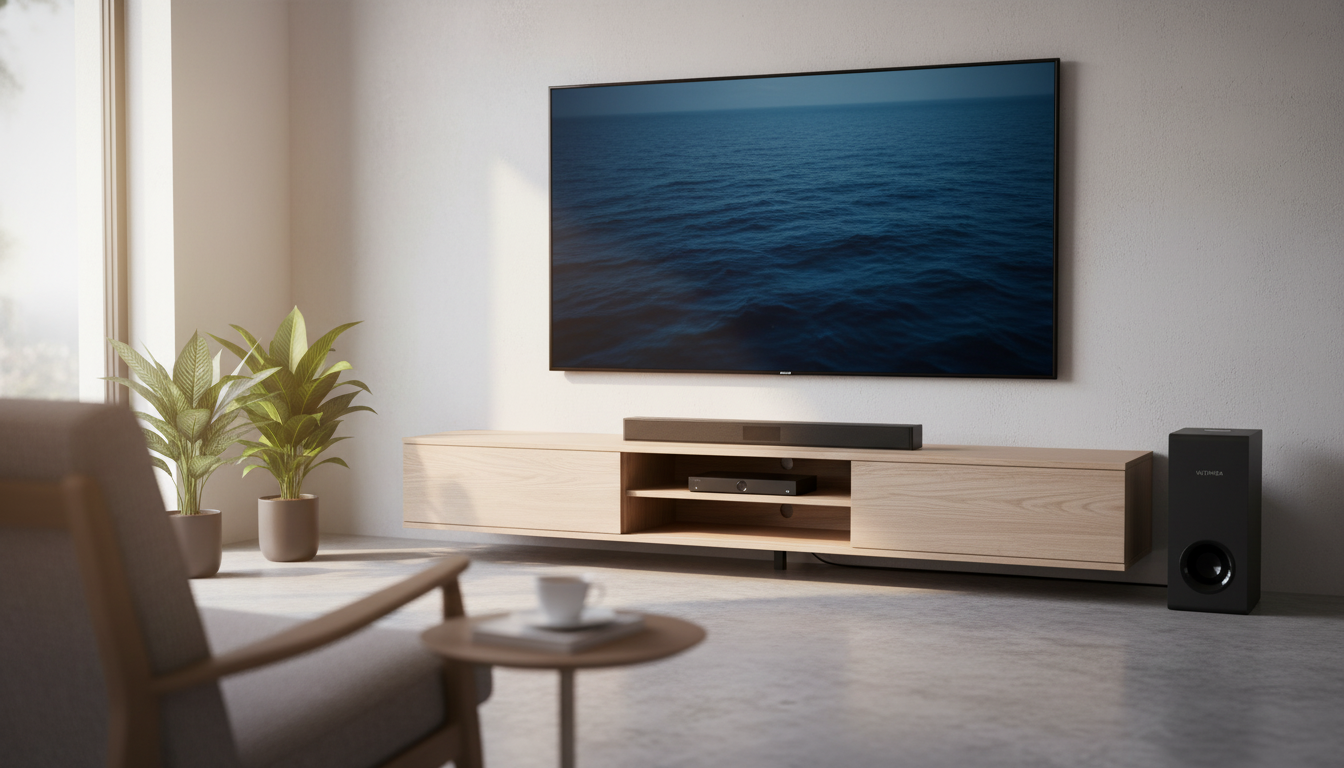
Soundbar with Dolby Atmos and Subwoofer for TV: Room-Filling Audio Without the Receiver
A Dolby Atmos soundbar with a dedicated subwoofer can transform everyday TV audio into clearer dialog, a wider presentation, and deeper bass—without building a full speaker system. A 2.1 Atmos setup is especially appealing for apartments, family rooms, and bedrooms where running wires and placing multiple speakers isn’t realistic. Below is what this kind of system can (and can’t) do, how to connect it for the best chance at Dolby Atmos, and how to dial it in for movies, sports, and late-night watching.
What a 2.1 Dolby Atmos soundbar setup delivers
A 2.1 soundbar system combines a main bar (left/right channels) with a separate subwoofer (the “.1”) that handles low frequencies. When Dolby Atmos decoding is supported, the soundbar can play immersive mixes and—depending on its design—use processing to create a more enveloping, room-filling effect.
- More spacious soundstage than TV speakers, with better separation for voices, music, and effects
- Dolby Atmos decoding support for immersive mixes (when paired with compatible TV/apps and proper connection)
- A separate subwoofer handles low frequencies so the main bar can focus on mids/highs for clearer dialog
- A simpler footprint than a multi-speaker receiver system while still adding impact for action scenes and concerts
Even without rear speakers, the biggest day-to-day upgrade usually comes from two places: dialog intelligibility at reasonable volume, and bass weight that makes movies and games feel less “flat.” For more on how Atmos works across devices and content, see Dolby’s Dolby Atmos overview.
Highlights of the 190W 2.1 Soundbar with Dolby Atmos
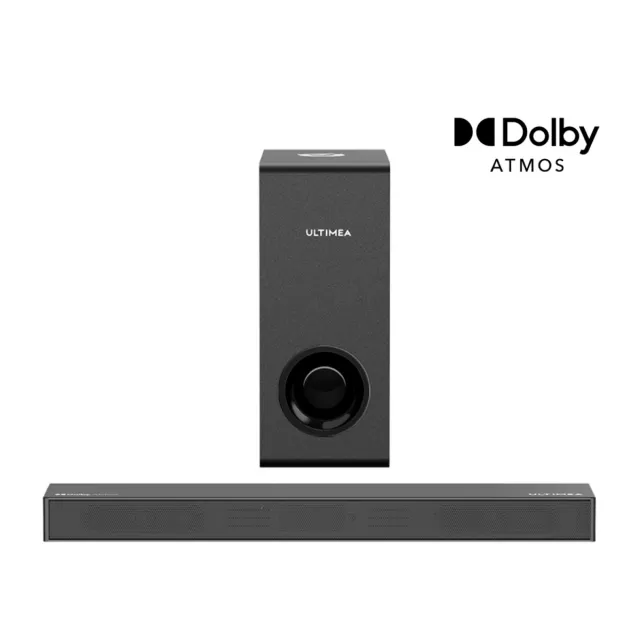
If the goal is a clean-looking TV setup that still hits hard when the soundtrack demands it, a 2.1 bar plus sub is a practical sweet spot. The 2.1 Soundbar with Dolby Atmos | 190W Soundbar & Subwoofer for TV is built around that idea—simple placement, quick connections, and a separate subwoofer for real low-end support.
- 2.1-channel design paired with a subwoofer for stronger bass and fuller sound at typical living-room volumes
- 190W output rating (manufacturer spec) aimed at improving loudness headroom and dynamic impact over built-in TV speakers
- Designed for TV placement: low-profile bar form factor and a separate subwoofer that can be positioned for better bass response
- Good fit for apartments and family rooms where a receiver and multiple speakers would be impractical
| Feature | Typical TV Speakers | 2.1 Soundbar with Subwoofer |
|---|---|---|
| Dialog clarity | Often thin or muffled at low volume | Stronger midrange presence; easier to follow voices |
| Bass impact | Minimal low-end due to small drivers | Dedicated subwoofer adds depth for explosions, drums, and ambience |
| Immersion | Narrow soundstage from the TV chassis | Wider presentation; Atmos content can feel more spacious |
| Placement | Fixed in TV | Flexible: bar under TV, subwoofer placed where bass performs best |
| Setup complexity | None | Single-cable TV connection plus power; quick tuning |
Getting Dolby Atmos from a TV: connection paths that matter
Atmos success is often less about the soundbar and more about the connection chain. TVs handle “return audio” from internal streaming apps (Netflix, Disney+, etc.) differently than audio coming from an external streamer or console, and the port you use can decide whether Atmos appears at all.
For deeper technical background on eARC, the HDMI standards body has a helpful overview: HDMI Licensing Administrator: Enhanced Audio Return Channel (eARC).
| Connection | Use when | Notes |
|---|---|---|
| HDMI eARC | TV supports eARC and Atmos is a priority | Most straightforward for modern TVs; enables TV remote volume via CEC on many setups |
| HDMI ARC | TV has ARC but not eARC | May still support Atmos via streaming depending on TV/app; results vary by model |
| Optical | Older TVs or ARC issues | Solid stability but limited format support; typically not Atmos |
| Bluetooth | Phone/tablet playback | Convenient for music; latency may affect video lip-sync for TV use |
Placement tips for cleaner dialog and stronger bass
Tuning for different content: movies, sports, and late-night viewing
What to check before buying a Dolby Atmos soundbar for your TV
Common setup issues and fast fixes
Recommended add-ons for a comfortable TV space
For a bedroom or compact media setup, comfort and lighting can matter almost as much as audio. If you’re building a dedicated TV corner, the Twin Size Upholstered Bed with LED Lights and Crown Headboard can help create a cozy, screen-ready space with built-in ambiance.
FAQ
Will a 2.1 soundbar with Dolby Atmos still sound immersive without rear speakers?
Yes—Atmos decoding and virtualization can expand width and perceived height, and the subwoofer adds the low-end scale that TV speakers lack. That said, true wraparound effects are more convincing with dedicated rear speakers, while a 2.1 setup focuses on a big front soundstage plus impactful bass.
Do you need HDMI eARC to get Dolby Atmos on a TV soundbar?
HDMI eARC is the most reliable option because it supports a wider range of audio formats and simplifies TV-to-soundbar audio. Some TVs can still send Atmos over HDMI ARC using Dolby Digital Plus from built-in streaming apps, but compatibility varies; optical typically won’t carry Atmos.
Where should the subwoofer be placed for the best bass?
Start near the TV area, then test a few nearby spots—closer to a wall often adds depth, while corners can cause boominess in some rooms. In apartments, pulling the sub slightly away from corners and using isolating pads can reduce vibration through floors and walls.















Leave a comment