37-Inch White Vanity: Quartz Top, Left-Offset Sink
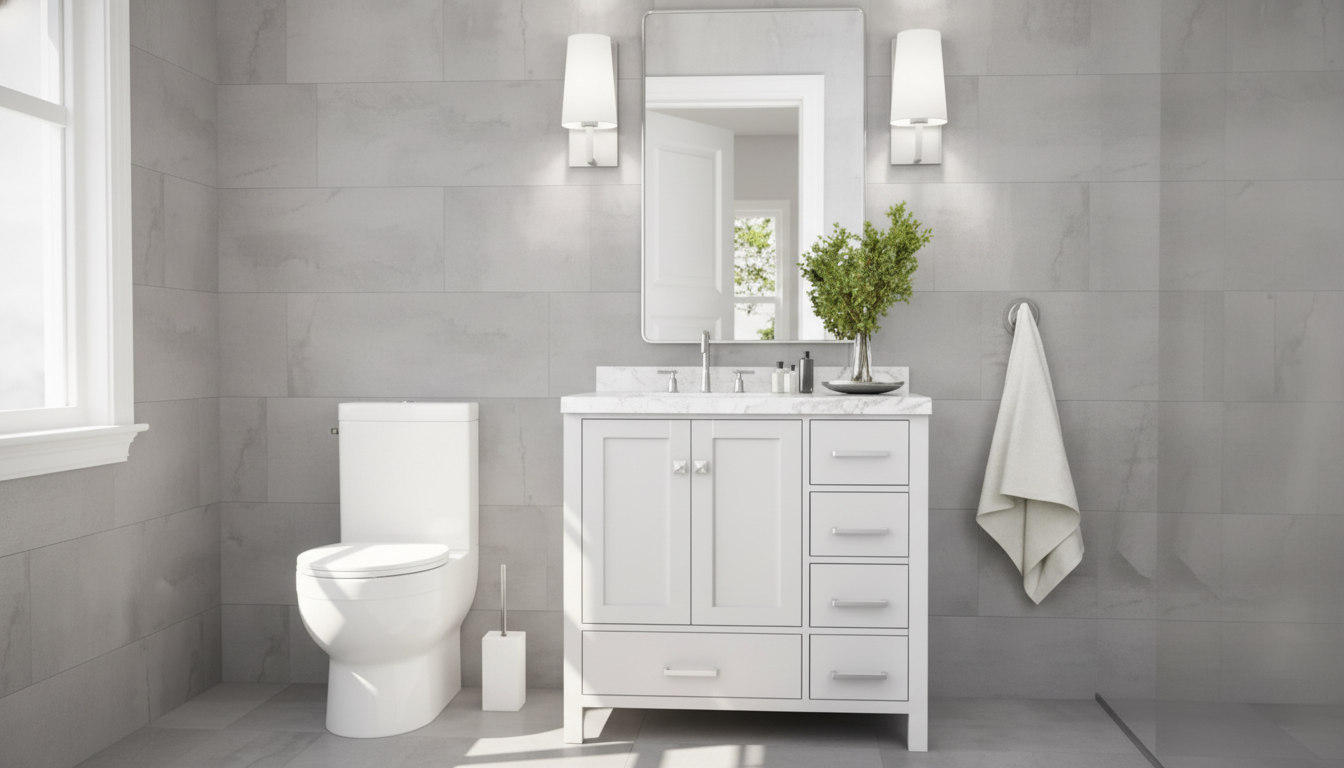
37″ White Bathroom Vanity with Quartz Countertop and Left Offset Sink
A left-offset sink vanity keeps daily tasks comfortable while freeing up countertop space where it’s most useful. This 37″ white vanity pairs a clean, bright cabinet finish with a quartz countertop, balancing a fresh look with a surface made for busy bathrooms. The result is a setup that feels intentionally planned: more landing room for the items you actually use, a sink zone that stays functional, and a look that works with everything from modern tile to classic brushed hardware.
Why a left-offset sink changes the way the vanity works
The most noticeable difference with a left-offset sink is how the countertop gets “zoned.” Instead of splitting the available surface evenly, the design gives one side a larger uninterrupted stretch—often the side that ends up doing the most work during morning and bedtime routines.
- Creates a larger uninterrupted prep zone on one side for toiletries, trays, or styling tools.
- Helps align the basin with existing plumbing in some remodels, potentially reducing drain relocation.
- Makes room for countertop accessories (soap dispenser, toothbrush holder) without crowding the faucet area.
- Works well in shared bathrooms when one side is treated as a “sink zone” and the other as a “set-down zone.”
For households that juggle makeup bags, grooming tools, and skincare, the offset layout can feel calmer because it reduces the “everything piles up around the faucet” problem.
Quartz countertop benefits in everyday use
Bathrooms are tough environments: humidity, frequent splashes, and products that can discolor lighter surfaces. Quartz is a popular choice because it’s designed for repeat use and quick wipe-downs.
- Resists staining from common bathroom products such as makeup, toothpaste, and lotions when cleaned promptly.
- Low-porosity surface compared with many natural stones, helping limit moisture absorption.
- Consistent appearance that pairs easily with white cabinetry, brushed metals, and modern tile.
- Simple care routine: gentle cleaner, soft cloth, and avoiding harsh abrasives.
For general bathroom planning and clearances, the National Kitchen & Bath Association guidelines are a helpful reference point: NKBA Bathroom Planning Guidelines. For water-saving faucet ideas that can pair nicely with a single-sink vanity, see EPA WaterSense.
Size, placement, and fit for a 37″ vanity
A 37″ vanity often hits the “just right” range: substantial enough to offer storage and usable counter space, without dominating the room the way many 42″–48″ cabinets can in medium bathrooms.
- A 37″ width typically fits well in medium bathrooms where a full 42″–48″ cabinet may feel too bulky.
- Left-offset sink layout can influence mirror centering; consider a wider mirror or a medicine cabinet that visually balances the offset basin.
- Check door swing and drawer pull clearance against nearby walls, toilets, and showers.
- Confirm countertop overhang and backsplash needs before ordering accessories and wall trim.
One practical tip: use painter’s tape to outline the vanity footprint on the floor, then “walk” the door swing and standing space in front of the sink. It’s an easy way to catch tight clearances before delivery day.
Materials, storage, and day-to-day organization
White cabinetry is a classic choice for good reason: it reflects light, keeps the space feeling open, and provides a clean backdrop for hardware and wall color. With an offset sink, the cabinet interior layout can also feel more usable because the plumbing zone is concentrated under the basin rather than centered.
- White cabinetry keeps the room bright and can make smaller spaces feel larger.
- Offset basin often leaves more usable storage volume under the open countertop section (depending on cabinet layout).
- Plan categories: daily items near the sink, backups and cleaning supplies deeper in the cabinet.
- Add organizers: under-sink U-trays, drawer dividers, and a small bin for hair tools to reduce countertop clutter.
Installation notes to plan before delivery day
If you’re comparing care needs across countertop materials, the Natural Stone Institute has useful general care guidance (even if you’re choosing quartz, it’s helpful context when deciding between materials): Stone Care Resources.
Quick specification checklist
| Item | What to confirm | Why it matters |
|---|---|---|
| Vanity width | 37 inches | Ensures fit between walls and leaves clearance for doors and drawers |
| Sink position | Left-offset | Affects drain alignment, mirror centering, and countertop workspace |
| Countertop material | Quartz | Durability, stain resistance, and care requirements |
| Faucet compatibility | Hole configuration on countertop | Prevents last-minute faucet swaps or extra drilling |
| Plumbing clearance | Trap and shutoff placement under sink | Avoids interference with drawers/shelves and reduces install rework |
| Moisture protection | Sealant at backsplash and edges | Helps prevent water damage over time |
Care and cleaning habits that protect quartz and cabinetry
Style pairings that complement a white vanity and quartz top
In-stock picks
- 37″ White Bathroom Vanity with Quartz Countertop and Left Offset Sink
- Wireless Gaming Earbuds with Triple Connection and Low-Latency Modes
- Zinc Alloy Car Key Case Cover for Mercedes C S Class Key Shell Protector
FAQ
Is an offset sink less comfortable than a centered sink?
Comfort depends on standing clearance and how the mirror and lighting are positioned. Many people find a left-offset sink feels natural, and the extra counter space can make daily routines easier as long as the mirror visually balances the layout.
Does quartz require sealing like natural stone?
Most quartz surfaces are non-porous and typically do not need sealing. Follow the manufacturer’s care guidance and stick to gentle, non-abrasive cleaners to maintain the finish.
What should be measured before buying a 37″ vanity?
Measure the width between walls, the available depth, and door/drawer clearance near toilets or showers. Also confirm plumbing rough-in location relative to the left-offset basin and choose a mirror size that won’t make the sink area feel visually off-center.















Leave a comment