Dresser Styling Quick Rules: Reset Checklist by Room Style
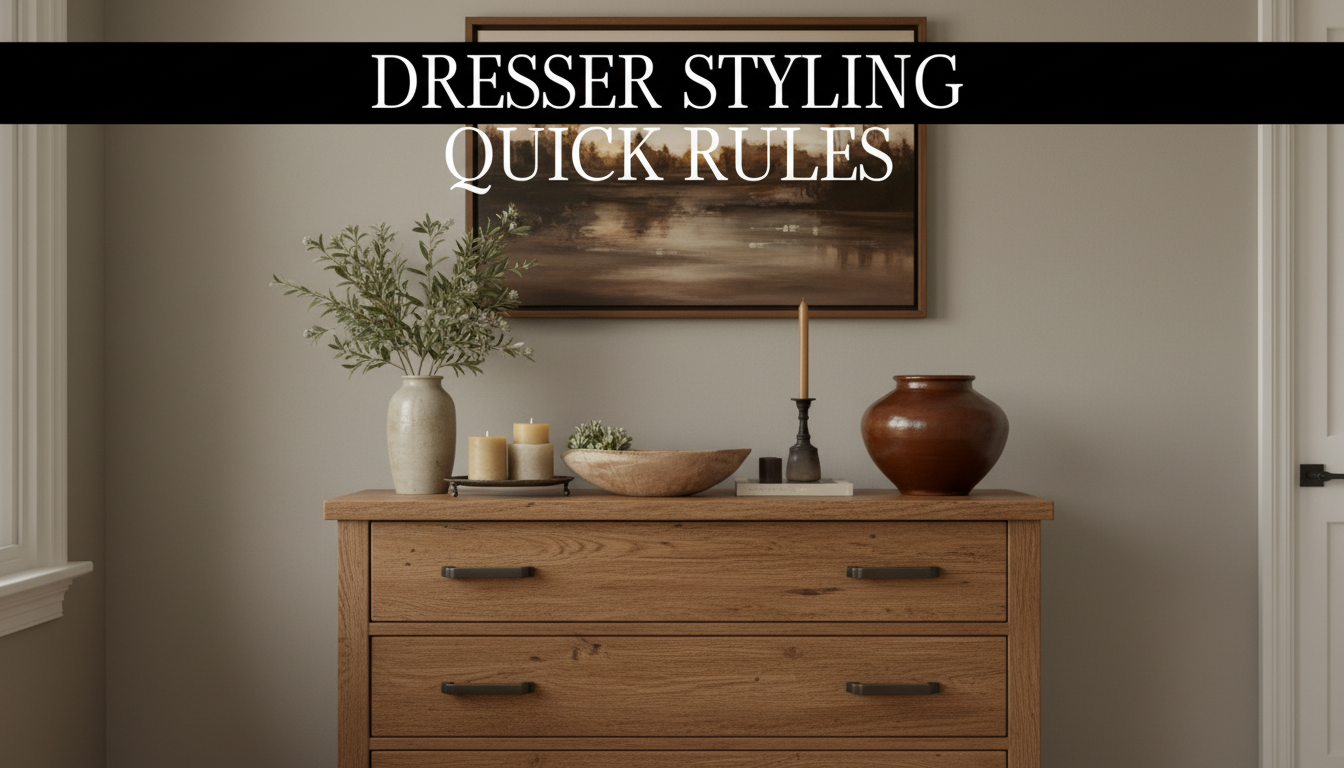
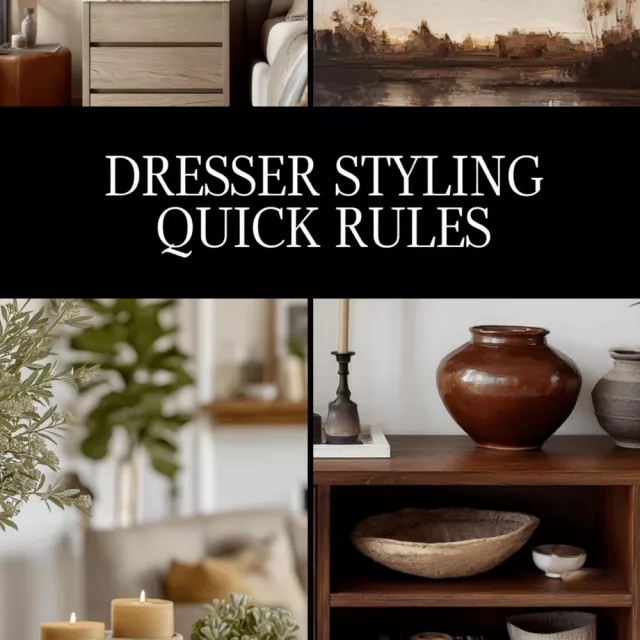
Dresser Styling Quick Rules: A Simple Checklist for Minimalist, Modern, and Bohemian Rooms
A dresser top can look finished in minutes when a few repeatable rules guide scale, balance, and function. The goal isn’t to fill space—it’s to create an arrangement that feels intentional, is easy to maintain, and matches the room’s vibe. Below is a fast, room-style-friendly approach built around design basics like balance, emphasis, and proportion (a helpful reference is The Getty’s principles of design overview), plus a simple “reset button” formula you can reuse anytime.
Start with a clean, functional baseline
- Clear everything off and wipe the surface; styling works best when the backdrop looks intentional, not busy.
- Decide the dresser’s job: purely decorative, daily drop zone, or a mix (this determines how many objects can stay out).
- Create a “must-keep” zone (keys, jewelry dish, fragrance tray) and an “everything else” zone that goes in drawers or baskets.
- Leave visible breathing room; negative space is part of the arrangement, especially for small tops.
Quick rules that make almost any arrangement look composed
- Anchor first: place a tall element at the back (mirror, framed art, or lamp) to set height and give the eye a focal point.
- Work in thirds: aim for 3–7 items total depending on dresser size, grouped into 1–3 clusters rather than scattered singles.
- Vary height: use a tall + medium + low rhythm to avoid a flat skyline.
- Repeat one material or color at least twice: wood, black metal, white ceramic, brass—repetition is what makes a mix feel cohesive (color theory basics can help when choosing accents: Britannica’s color wheel overview).
- Contain everyday items: keep daily-use objects on a tray or in a bowl so the surface reads “styled,” not “cluttered.”
- Face the focal point forward: books stacked, frames squared, and candles aligned reduces visual noise fast.
A simple formula by dresser size (use this as a reset button)
- Small dresser or narrow chest: one anchor + one container + one accent (3-piece formula).
- Standard bedroom dresser: one anchor + two clusters (left/right) with a tray in at least one cluster.
- Long, low dresser: one large anchor centered or slightly offset + three clusters spaced with clear gaps.
- If the top holds daily-use items, downgrade decorative quantity and prioritize containers.
Fast Styling Recipes (Pick One and Adjust)
| Dresser type | Anchor | Supporting pieces | Finishing touch |
|---|---|---|---|
| Small / narrow | Round mirror or 1 frame | Catchall dish + small vase | One book or candle |
| Standard | Lamp or stacked art | Tray with 2–3 items + plant | Texture element (woven box, stone coaster) |
| Long / low | Large mirror or wide art | Two object clusters + one book stack | One sculptural piece or tall branch |
| High-traffic drop zone | Mirror (visual anchor) | Tray + lidded container | Small scent item (diffuser/candle) |
Minimalist dresser styling: fewer items, stronger shapes
- Choose one statement anchor (oversized mirror, single large frame, or clean-lined lamp) and keep supporting pieces to 2–3 items.
- Limit the palette to 2–3 neutrals; let contrast come from form (cylinder vase, rectangular tray, round bowl).
- Use hidden storage: a lidded box or drawer organizers to keep the top visually quiet.
- Avoid tiny decor; in minimalist rooms, small items read as clutter unless contained on a tray.
- Best go-to set: matte ceramic vase + simple tray + one book stack with a single object on top.
Modern dresser styling: crisp lines and intentional contrast
- Mix sleek materials: glass, metal, lacquer, and polished stone; repeat one finish (black, chrome, brass) across at least two items.
- Use asymmetry with balance: a lamp on one side can be balanced by a taller vase or plant on the other.
- Keep frames and art bold and simple; align edges for a tidy, architectural look.
- Add one organic element (branch, plant, textured bowl) to soften the geometry.
- Best go-to set: lamp + rectangular tray + sculptural object + low greenery.
Bohemian dresser styling: layered texture without mess
Common dresser-top mistakes (and quick fixes)
Use a printable checklist to style faster and keep it consistent
If a step-by-step reference helps you keep the look consistent, the Dresser Styling Quick Rules Checklist (Printable Digital Download) is an easy way to standardize your setup across minimalist, modern, and bohemian rooms.
A quick shopping and swap guide (use what you already own first)
If the dresser is part of a full bedroom refresh, coordinating the “top-of-dresser” look with the bed’s lines can make the room feel more finished. A piece like the Twin Size Upholstered Bed with LED Lights and Crown Headboard pairs especially well with modern styling—clean edges, a consistent palette, and a single bold anchor above the dresser.
FAQ
How many items should be on top of a dresser?
As a quick range, aim for 3–5 items on a small dresser, 5–9 on a standard dresser, and up to about 11 on a long/low dresser. Group items into 1–3 clusters and leave negative space so the top still feels calm.
What should be the tallest item on a dresser arrangement?
A mirror, framed art, or a lamp typically works best as the tallest item. Place it toward the back to set the height and give the arrangement a clear focal point.
How can a dresser be styled and still work as a daily drop zone?
Use a tray or bowl for essentials (keys, wallet, jewelry), add a lidded container for small clutter, and keep one open section of the surface clear. Limit decorative items so function stays easy day to day.









Leave a comment