Wooden Animal & Nature Puzzle Board: Montessori Learning
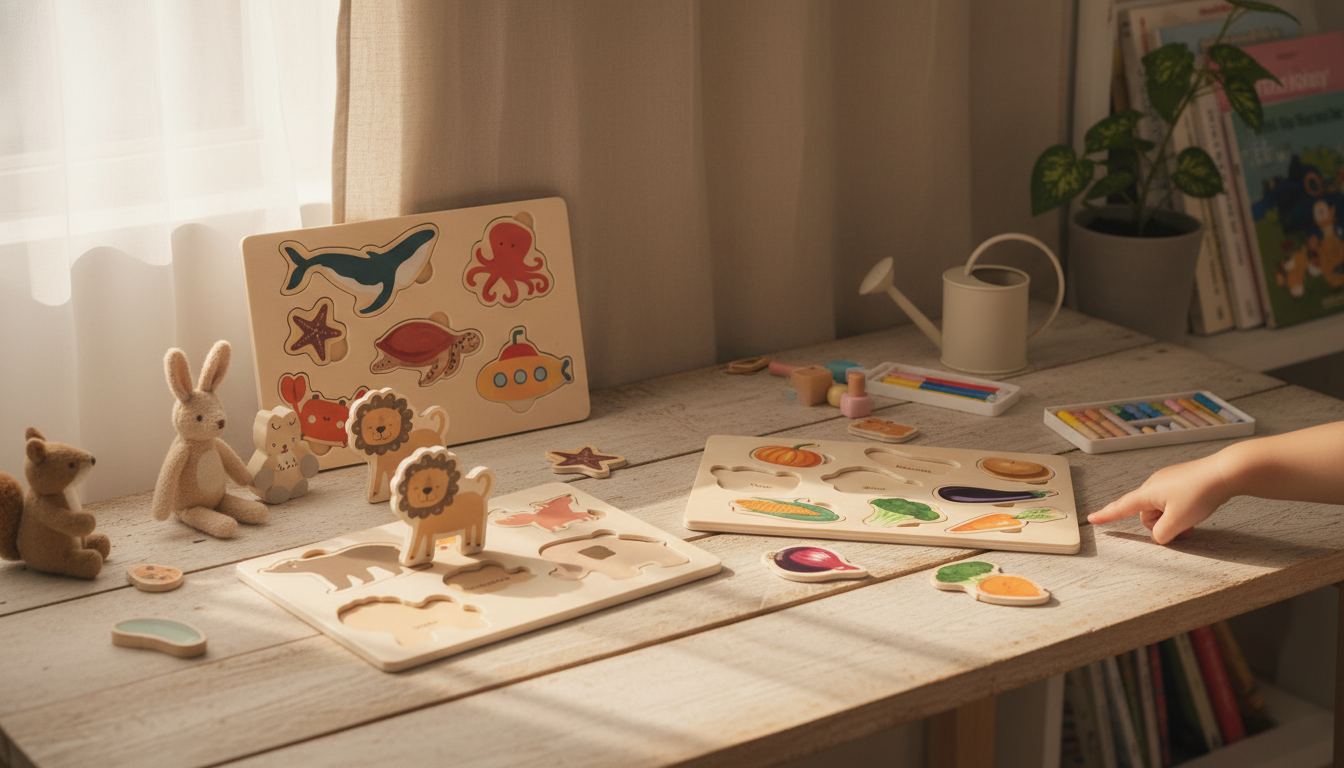
Montessori Wooden Animal & Nature Cognition Puzzle Board for Kids: Hands-On Learning Through Play
A wooden puzzle board with animal and nature themes can turn everyday playtime into a calm, skill-building routine. With simple matching and grasping activities, kids practice recognition, language, and fine-motor control while staying engaged with screen-free materials. Many families also like that wooden puzzles create a clear “start and finish” moment—pieces come out, the activity happens, and everything returns to its place. For more guidance, see What Are the Benefits of Montessori Toys for Child Development?.
For parents looking for an easy, budget-friendly option, the Montessori Wooden Animal & Nature Cognition Puzzle Board for Kids fits neatly into short play sessions while still offering meaningful repetition. The American Academy of Pediatrics highlights play as essential for development, supporting skills from self-regulation to problem-solving (AAP: The Power of Play). For further reading, see [PDF] Connecting children to nature in a Montessori primary environment.
What This Puzzle Board Helps Kids Practice
- Animal and nature recognition through matching shapes and pictures
- Fine-motor development from grasping, placing, and aligning pieces
- Hand–eye coordination and visual scanning as kids search for the correct slot
- Early language skills by naming animals, colors, and nature elements
- Attention and independence through repeatable, self-correcting play
Because the “answer” is built into the board (each piece has a specific home), children get immediate feedback without needing constant adult correction. That gentle self-correction is a big reason Montessori-style materials tend to stay in rotation: kids can repeat the same task and still feel capable and in control.
Why Wooden Montessori-Style Puzzles Work Well at Home
- Tactile feedback supports learning: wood offers weight and texture that helps children focus.
- Clear start-and-finish activity: pieces come out, get sorted, and return to their spaces.
- Encourages real-world vocabulary: animals, habitats, and nature categories are easy to talk about during play.
- Low-noise and travel-friendly: compared with many electronic toys, wooden boards are calmer and easier to pack.
- Flexible for different settings: works for solo play, sibling play, or short parent-guided sessions.
Common Skills and Simple Ways to Extend Play
| Skill area | What kids do | Easy extension at home |
|---|---|---|
| Fine-motor control | Pinch and place each piece into its slot | Time a “slow and careful” round to encourage precision |
| Cognition & memory | Recall where pieces belong | Hide 2–3 pieces and ask which are missing |
| Language | Name animals and nature items | Add sounds, habitats, or “What do they eat?” questions |
| Sorting & categories | Group by animal type or environment | Create two piles: land vs. water (or forest vs. farm) |
| Social-emotional | Persist through trial and error | Use calm prompts: “Try turning it” or “Check the corners” |
As kids grow, these simple extensions keep the same board feeling “new,” without adding clutter. If you like aligning activities with typical early childhood milestones, the CDC’s developmental milestone resources can be a helpful reference point for what many children practice at different ages (CDC: Developmental Milestones).
Choosing the Right Puzzle Board for Your Child
- Age and stage: larger, easy-grip pieces tend to work best for toddlers; more detailed matching suits older preschoolers.
- Piece count: fewer pieces supports quick success; more pieces increases challenge and attention span.
- Image clarity: high-contrast animal and nature illustrations make matching easier.
- Safety basics: smooth edges, durable construction, and kid-safe finishes are essential.
- Interests: kids often stay engaged longer when the theme matches current fascinations (animals, forest, ocean, etc.).
For toy safety reminders—especially for younger siblings who may mouth pieces—AAP’s consumer guidance is worth keeping in mind (HealthyChildren.org: Toy Safety).
How to Use It: Quick Activities (5–10 Minutes)
- Name-and-place: hand a piece, say the name together, then place it.
- Find the match: place all pieces on the table and ask for a specific animal or nature item.
- Sound game: imitate the animal sound before placing the piece.
- Habitat talk: ask where the animal lives (forest, farm, water) and why.
- One-at-a-time challenge: present only 3–4 pieces for younger kids to reduce overwhelm.
Care, Storage, and Gift Tips
Product Snapshot
The Montessori Wooden Animal & Nature Cognition Puzzle Board for Kids is a budget-friendly, screen-free learning activity. It’s suitable for building recognition, coordination, and early vocabulary through repeated matching play, and it was listed as in stock at the time of writing.
At a Glance
| Item | Details |
|---|---|
| Product | Montessori Wooden Animal & Nature Cognition Puzzle Board for Kids |
| Price | $4.67 USD |
| Availability | In stock |
| Category | Kids & Babies |
A simple add-on for a kid-friendly space
If you’re building a calmer routine around independent play, a comfortable sleep and reading setup can help keep the whole room feeling consistent. For a coordinated kids’ room upgrade, consider the Twin Size Upholstered Bed with LED Lights and Crown Headboard (also listed as in stock at the time of writing).
FAQ
What age is a wooden animal and nature puzzle board best for?
Many kids enjoy this style of puzzle from the toddler years through preschool, especially when pieces are easy to grip and the pictures are clear. Start with short, guided play, then gradually let your child complete more of the board independently as confidence grows.
How does a Montessori-style puzzle support early learning?
It supports self-correction, concentration, and independence because children can test a piece and immediately see whether it fits. The repeated grasp-and-place motion builds fine-motor control, while naming and categorizing the images strengthens early vocabulary.
How should a wooden puzzle be cleaned and stored?
Wipe it with a slightly damp cloth, dry it promptly, and avoid soaking or harsh cleaners that can damage wood. Store all pieces together in a small pouch or box so parts don’t get lost between play sessions.
Recommended for you
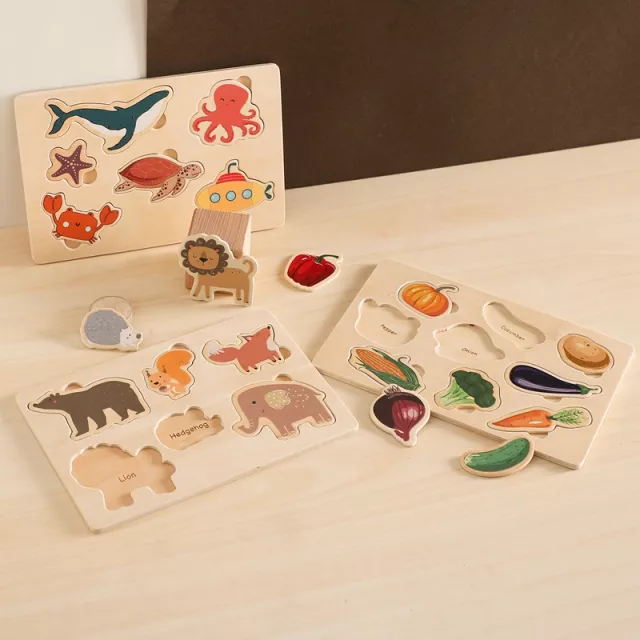

Montessori Wooden Animal & Nature Cognition Puzzle Board for Kids: Hands-On Learning Through Play
A wooden puzzle board with animal and nature themes can turn everyday playtime into a calm, skill-building routine. With simple matching and grasping activities, kids practice recognition, language, and fine-motor control while staying engaged with screen-free materials. Many families also like that wooden puzzles create a clear “start and finish” moment—pieces come out, the activity happens, and everything returns to its place. For more guidance, see How Montessori Learning Supports Cognitive Development in Early ….
For parents looking for an easy, budget-friendly option, the Montessori Wooden Animal & Nature Cognition Puzzle Board for Kids fits neatly into short play sessions while still offering meaningful repetition. The American Academy of Pediatrics highlights play as essential for development, supporting skills from self-regulation to problem-solving (AAP: The Power of Play). For further reading, see Hands-On Montessori Activities for 3 Year Olds.
What This Puzzle Board Helps Kids Practice
- Animal and nature recognition through matching shapes and pictures
- Fine-motor development from grasping, placing, and aligning pieces
- Hand–eye coordination and visual scanning as kids search for the correct slot
- Early language skills by naming animals, colors, and nature elements
- Attention and independence through repeatable, self-correcting play
Because the “answer” is built into the board (each piece has a specific home), children get immediate feedback without needing constant adult correction. That gentle self-correction is a big reason Montessori-style materials tend to stay in rotation: kids can repeat the same task and still feel capable and in control.
Why Wooden Montessori-Style Puzzles Work Well at Home
- Tactile feedback supports learning: wood offers weight and texture that helps children focus.
- Clear start-and-finish activity: pieces come out, get sorted, and return to their spaces.
- Encourages real-world vocabulary: animals, habitats, and nature categories are easy to talk about during play.
- Low-noise and travel-friendly: compared with many electronic toys, wooden boards are calmer and easier to pack.
- Flexible for different settings: works for solo play, sibling play, or short parent-guided sessions.
Common Skills and Simple Ways to Extend Play
| Skill area | What kids do | Easy extension at home |
|---|---|---|
| Fine-motor control | Pinch and place each piece into its slot | Time a “slow and careful” round to encourage precision |
| Cognition & memory | Recall where pieces belong | Hide 2–3 pieces and ask which are missing |
| Language | Name animals and nature items | Add sounds, habitats, or “What do they eat?” questions |
| Sorting & categories | Group by animal type or environment | Create two piles: land vs. water (or forest vs. farm) |
| Social-emotional | Persist through trial and error | Use calm prompts: “Try turning it” or “Check the corners” |
As kids grow, these simple extensions keep the same board feeling “new,” without adding clutter. If you like aligning activities with typical early childhood milestones, the CDC’s developmental milestone resources can be a helpful reference point for what many children practice at different ages (CDC: Developmental Milestones).
Choosing the Right Puzzle Board for Your Child
- Age and stage: larger, easy-grip pieces tend to work best for toddlers; more detailed matching suits older preschoolers.
- Piece count: fewer pieces supports quick success; more pieces increases challenge and attention span.
- Image clarity: high-contrast animal and nature illustrations make matching easier.
- Safety basics: smooth edges, durable construction, and kid-safe finishes are essential.
- Interests: kids often stay engaged longer when the theme matches current fascinations (animals, forest, ocean, etc.).
For toy safety reminders—especially for younger siblings who may mouth pieces—AAP’s consumer guidance is worth keeping in mind (HealthyChildren.org: Toy Safety).
How to Use It: Quick Activities (5–10 Minutes)
- Name-and-place: hand a piece, say the name together, then place it.
- Find the match: place all pieces on the table and ask for a specific animal or nature item.
- Sound game: imitate the animal sound before placing the piece.
- Habitat talk: ask where the animal lives (forest, farm, water) and why.
- One-at-a-time challenge: present only 3–4 pieces for younger kids to reduce overwhelm.
Care, Storage, and Gift Tips
Product Snapshot
The Montessori Wooden Animal & Nature Cognition Puzzle Board for Kids is a budget-friendly, screen-free learning activity. It’s suitable for building recognition, coordination, and early vocabulary through repeated matching play, and it was listed as in stock at the time of writing.
At a Glance
| Item | Details |
|---|---|
| Product | Montessori Wooden Animal & Nature Cognition Puzzle Board for Kids |
| Price | $4.67 USD |
| Availability | In stock |
| Category | Kids & Babies |
A simple add-on for a kid-friendly space
If you’re building a calmer routine around independent play, a comfortable sleep and reading setup can help keep the whole room feeling consistent. For a coordinated kids’ room upgrade, consider the Twin Size Upholstered Bed with LED Lights and Crown Headboard (also listed as in stock at the time of writing).
FAQ
What age is a wooden animal and nature puzzle board best for?
Many kids enjoy this style of puzzle from the toddler years through preschool, especially when pieces are easy to grip and the pictures are clear. Start with short, guided play, then gradually let your child complete more of the board independently as confidence grows.
How does a Montessori-style puzzle support early learning?
It supports self-correction, concentration, and independence because children can test a piece and immediately see whether it fits. The repeated grasp-and-place motion builds fine-motor control, while naming and categorizing the images strengthens early vocabulary.
How should a wooden puzzle be cleaned and stored?
Wipe it with a slightly damp cloth, dry it promptly, and avoid soaking or harsh cleaners that can damage wood. Store all pieces together in a small pouch or box so parts don’t get lost between play sessions.













Leave a comment