46×30 Rustic Farmhouse Solid Wood Dining Table (Seats 4)
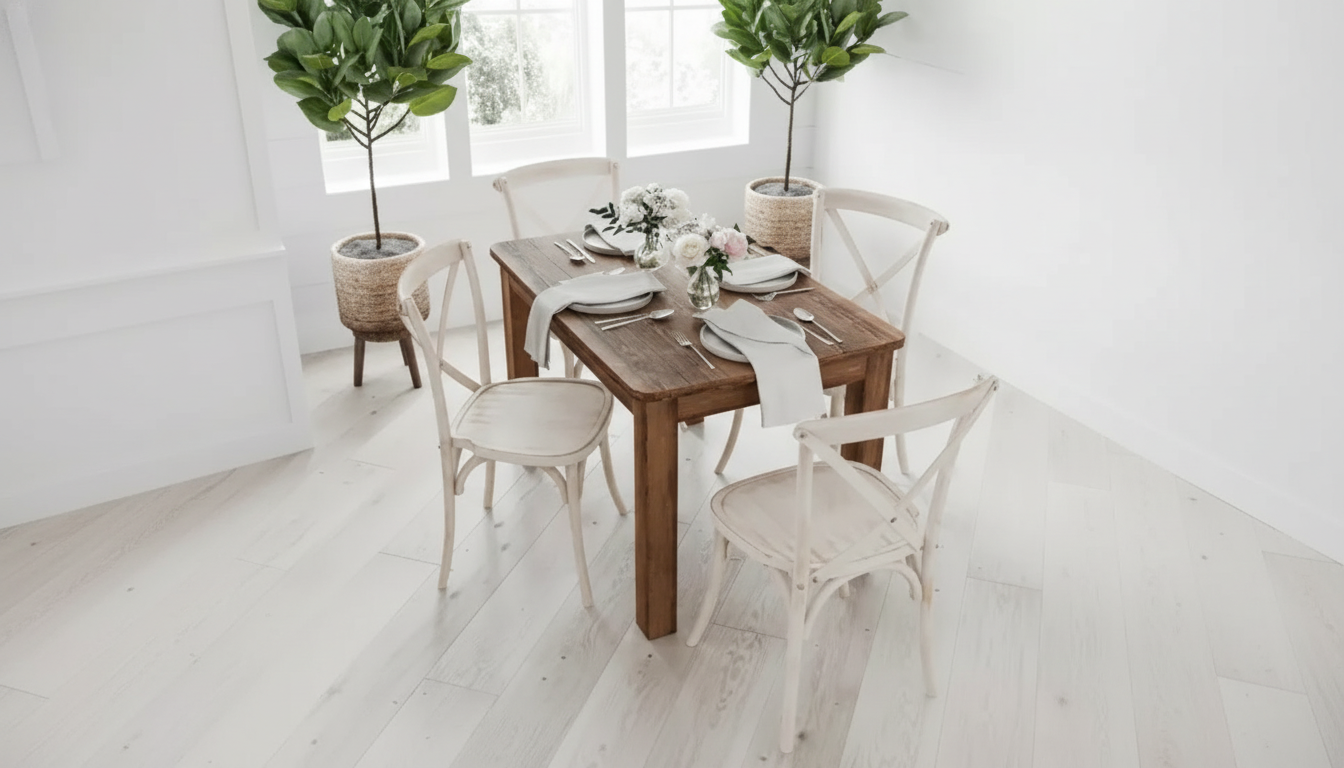
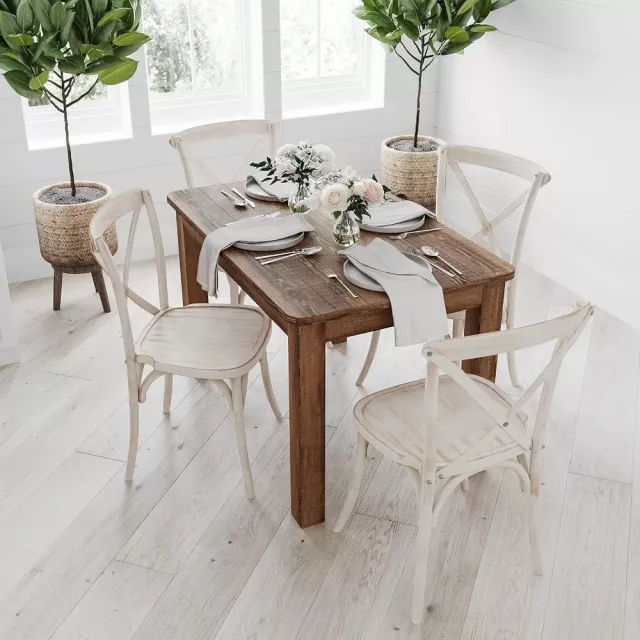
Rustic Farmhouse Solid Wood Dining Table with Square Legs (46″ x 30″) — Seats 4
A compact solid wood dining table can anchor everyday meals, crafts, and coffee catch-ups without overwhelming the room. This rustic farmhouse design pairs a warm wood top with sturdy square legs for a clean, grounded look that suits kitchens, breakfast nooks, and smaller dining areas. For more guidance, see HERCULES 46″ x 30″ Rectangular Antique Rustic Solid Pine Farm ….
What Makes This Table Feel Farmhouse
Farmhouse style works best when it looks uncomplicated, functional, and built to last. A solid wood table delivers that “real furniture” presence immediately—visible grain, natural variation, and a surface that feels warm rather than glossy or overly perfect. For further reading, see LITTLE TREE 55-Inch Dining Table for 6, Wooden Rectangle ….
- Solid wood character: Natural texture and tone bring an inviting, lived-in feel that fits rustic and modern farmhouse interiors alike.
- Square legs, timeless stance: The straight, substantial leg profile reads sturdy and uncluttered, balancing cozy farmhouse warmth with clean lines.
- Apartment-friendly proportions: Big enough to be a true dining table, compact enough for tighter layouts and open-plan spaces.
- Easy mixed seating: It pairs well with a bench on one side and chairs on the other for an effortless, casual setup.
Size, Seating, and Room Fit
At 46″ long x 30″ wide, this rectangular dining table is designed to seat up to 4 comfortably for everyday use. As a practical rule of thumb, plan for about 24″ of edge space per person along the long sides so elbows aren’t competing during meals.
To keep the room feeling easy to move through, aim to leave space around the table for chair pull-out and passing. Many designers recommend roughly 36″ of clearance where possible for comfortable circulation; tighter rooms can still work with less on one side if the layout is thoughtful. For a deeper sizing and clearance overview, see these dining table clearance guidelines.
Quick Planning Guide for a 46″ x 30″ Dining Table
| Layout goal | Suggested room clearance | What it helps with |
|---|---|---|
| Everyday dining for 4 | Allow roughly 36″ around the table (where possible) | Comfortable chair pull-out and passing space |
| Small space / tight walkway | Aim for at least 24–30″ on one side | Helps in breakfast nooks and kitchens |
| Against a wall (space saver) | Keep 36″ on open sides | Better flow while still seating 2–4 |
A rectangular top also gives you more placement options: center it for a classic dining setup, or push it toward a wall when you want to preserve walking space in a kitchen or studio. If you often host, a bench can be a helpful “flex seat” that slides in neatly when not in use.
Materials and Build Details to Look For
Solid wood is chosen as much for its longevity as for its beauty. Grain patterns, knots, and tone shifts are part of the appeal—your table won’t look identical to anyone else’s, and it can develop a gentle patina over time.
- Natural variation is normal: Expect differences in grain and color that make the surface feel authentic rather than uniform.
- Square legs for stability: A straight-leg build tends to distribute weight evenly, and it can reduce wobble when all hardware is tightened properly.
- Protective finish matters: A good finish helps resist moisture rings and light scratches; coasters and placemats keep the top looking fresh longer.
- Post-assembly check: If shipped flat-packed, re-check fasteners after about a week of use as the wood settles into its environment.
Wood also responds to the seasons. Indoor humidity changes can cause subtle movement over time, which is normal for real wood furniture. For a helpful overview, Wood Magazine explains how humidity affects wood and why steady conditions help.
Styling Ideas: Chairs, Benches, and Lighting
This size is especially easy to style because it doesn’t require oversized seating or dramatic décor to look “finished.” A few intentional choices can make the space feel designed without becoming precious.
Care and Maintenance for Solid Wood
Shop the Look: In-Stock Picks
- Rustic Farmhouse Solid Wood Dining Table with Square Legs, 46″ x 30″, Seats 4 — a space-smart solid wood table for everyday meals and compact dining areas.
- Twin Size Upholstered Bed with LED Lights and Crown Headboard — an easy bedroom upgrade that adds softness and a finished look.
- Men’s Genuine Leather Cowboy Belt with Copper Buckle for Jeans — a classic, Western-inspired accessory that pairs well with casual, rustic style.
FAQ
How many people can a 46″ x 30″ dining table seat comfortably?
Typically up to 4 adults for everyday dining. For the most comfortable spacing, plan around 24″ per person along the long sides; adding a bench can make the seating feel more flexible in tight rooms.
How much space should be left around a dining table for chairs?
Aim for about 36″ around the table where possible so chairs can slide out and people can walk behind seated diners. In smaller kitchens or nooks, 24–30″ on one side can work if it’s a low-traffic area.
How do solid wood dining tables hold up to daily use?
Solid wood is durable and often looks better over time as it develops character and a subtle patina. Using coasters or placemats and cleaning with gentle soap and water (then drying) helps protect the finish from moisture rings and light scratches.











Leave a comment