Twin Bunk Bed with Desk: Storage, LED + USB Power
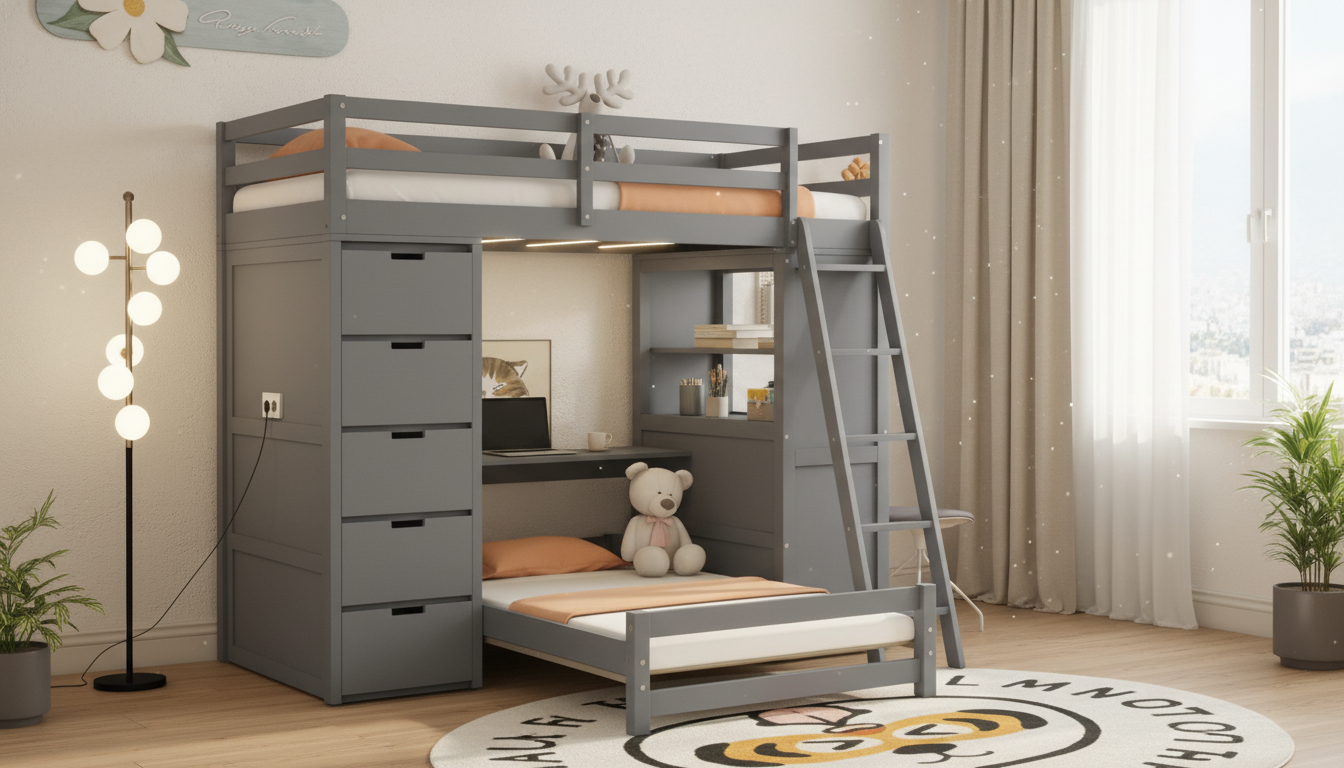
Twin Over Twin Bunk Bed with Desk, Shelves, Storage Drawers, LED, and USB Ports
A space-smart setup that combines two twin sleeping areas with a built-in desk, open shelving, storage drawers, and integrated lighting and charging—designed to help keep a shared bedroom organized, functional, and comfortable from homework time to lights-out.
What Makes This Bunk Bed a Room-Ready Setup
When a bedroom has to do double-duty, the right furniture layout matters as much as the décor. A twin-over-twin bunk bed with a desk, shelves, drawers, LED lighting, and USB ports brings multiple “zones” into one footprint so the room feels less crowded and more usable day to day.
- Twin-over-twin layout: Maximizes floor space while keeping both sleep surfaces the same size—helpful for siblings, sleepovers, or a guest-ready room.
- Built-in desk: Creates a dedicated study or creative area without needing a separate desk that eats up walking space.
- Open shelving: Keeps books, bins, and daily essentials within reach so the desktop stays clearer.
- Storage drawers: Reduces clutter by giving clothing, linens, toys, and games a consistent “home.”
- LED lighting: Adds soft illumination for evenings, reading, and early mornings—without flipping on a bright overhead light.
- USB ports: Supports convenient charging near the bed/desk area, so devices don’t migrate to the floor (or go missing).
Feature Breakdown: Sleep, Study, Store, and Charge
Think of this style of bunk bed as a mini room system: sleep up top and below, work in the middle zone, and store items where they’re easiest to put away. A few planning choices can make it feel even more effortless.
- Sleep: Twin beds work well for kids, teens, and occasional guest use. Pay close attention to mattress height so guardrails remain effective on the top bunk.
- Study: The desk surface is ideal for a laptop, notebooks, or crafts. Choose a compact chair that tucks in smoothly to keep the walkway open.
- Store: Use drawers for frequently used items (pajamas, sports gear, school supplies). Reserve shelves for books, display items, or labeled baskets.
- Light: LED lighting is handy as a low-glare option. Many households prefer warmer light for winding down; cooler light can feel brighter for homework.
- Power: USB ports cut down on adapter clutter. Route cables neatly so they don’t dangle near the ladder/steps or become a tripping hazard.
| Area | Built-In Elements | Best Uses | Practical Tips |
|---|---|---|---|
| Sleeping | Twin-over-twin bunks | Shared rooms, sleepovers, siblings | Choose mattresses that keep guardrails effective; use fitted sheets for easier top-bunk changes. |
| Study | Integrated desk | Homework, gaming laptop, arts/crafts | Add a clip-on organizer or desk mat; keep heavier items off upper shelves if they shift. |
| Organization | Shelves + drawers | Books, bins, clothes, bedding | Label bins; dedicate one drawer to spare linens for quick changes. |
| Comfort | LED lighting | Reading, gentle night light | Place LED on a dim setting (if available) to reduce glare before sleep. |
| Convenience | USB ports | Charging phone/tablet/headphones | Use short cables and secure excess length away from the ladder path. |
Safety and Daily Use Tips for Bunk Beds
Daily routines go more smoothly when the bunk is comfortable and predictable to use. For product-specific instructions, always follow the manufacturer’s manual, and review current consumer safety guidance such as the CPSC bunk bed safety information and the ASTM F1427 bunk bed standard.
- Use guardrails correctly, and confirm the top bunk has continuous protection on open sides.
- Follow age recommendations—many safety guidelines advise children under 6 should not sleep on the top bunk.
- Keep the ladder/entry area clear of cords, toys, and loose rugs to prevent slips.
- Use a night light or low LED setting to make nighttime climbing safer.
- Avoid hanging heavy items from rails or shelves that could fall during sleep.
- Periodically tighten hardware after the first few weeks and during seasonal cleanups.
Room Planning: Fit, Flow, and Cable Management
A bunk bed with a desk and power features can transform a room, but it’s worth planning the placement before assembly day.
Setup and Maintenance Basics
Who This Works Well For
In-Stock Picks to Complete the Room
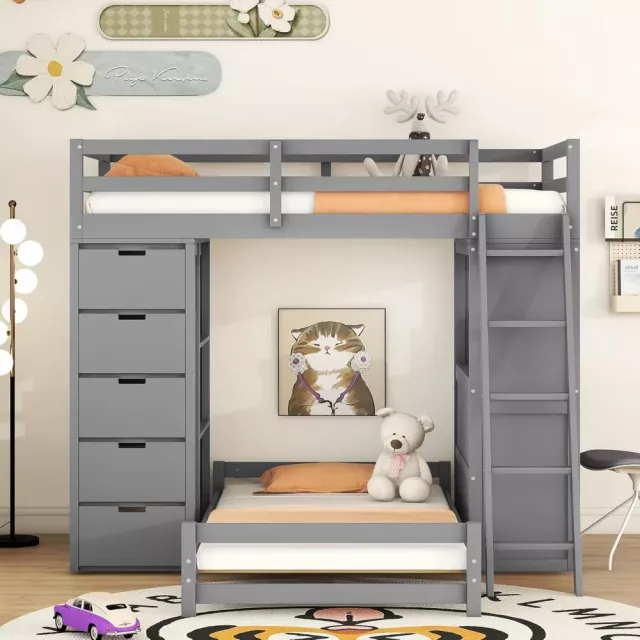
- Twin Over Twin Bunk Bed with Desk, Shelves, Storage Drawers, LED, and USB Ports
- Twin Size Upholstered Bed with LED Lights and Crown Headboard
FAQ
What mattress height is best for a twin bunk bed to keep the guardrails effective?
Check the manufacturer’s maximum mattress thickness recommendation, especially for the top bunk. The goal is to maintain adequate guardrail height above the mattress surface so the rail can help prevent rolling out.
Are USB ports and LED lights safe to use on a bunk bed?
They’re designed to be used safely when operated as directed. Keep liquids away from power components, avoid pinching cords during setup, use appropriate adapters if required, and route cables away from the ladder and sleep areas.
How can shelves and drawers be organized to reduce clutter in a shared room?
Assign each child a consistent shelf/drawer zone and use labeled bins so items go back quickly. Keep everyday essentials in the easiest-to-reach spots and reserve one drawer for spare bedding to simplify sheet changes.













Leave a comment