Full Loft Bed: Desk, Shelves, LEDs & Charging
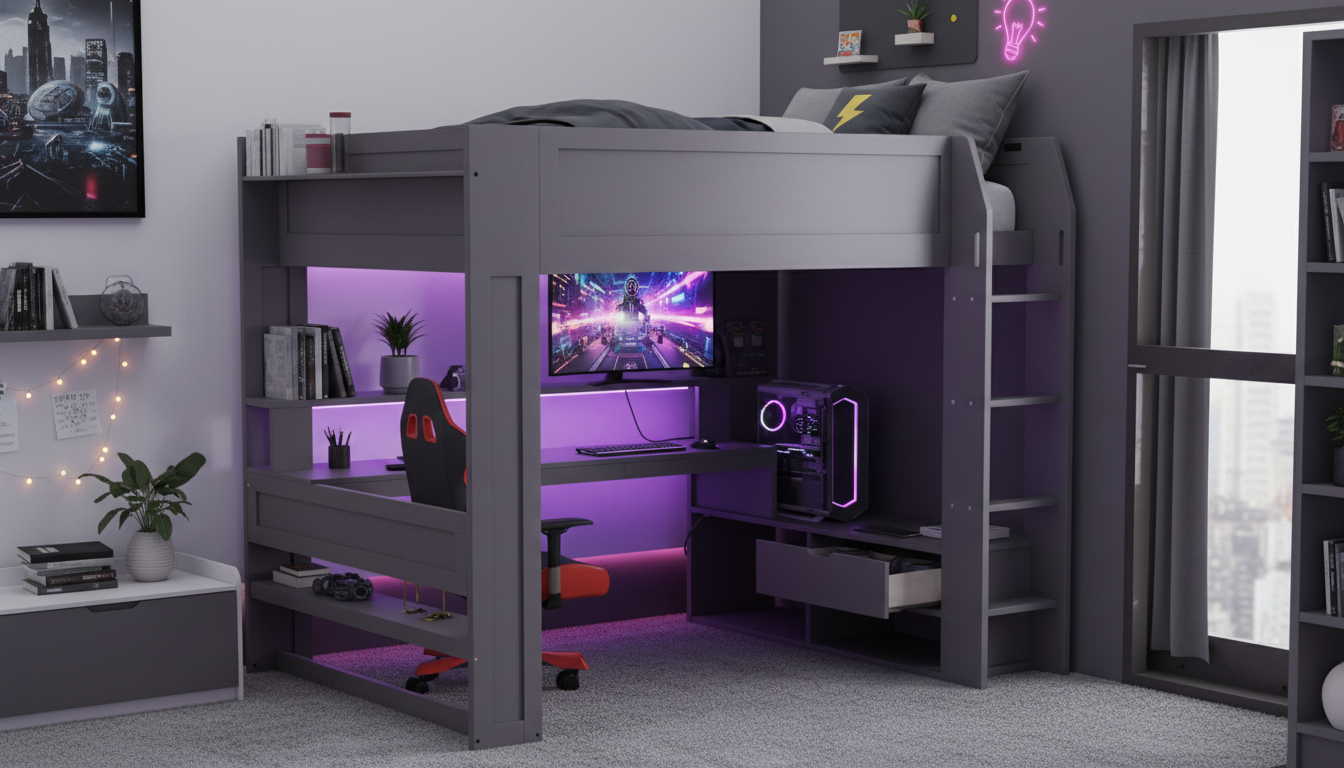
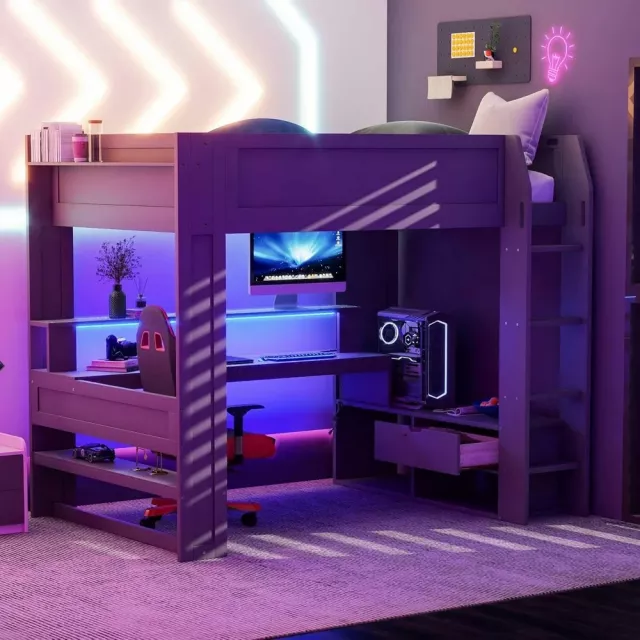
Full Size Wooden Loft Bed with Desk, Shelves, LED Lights, and Charging Station
A full-size loft bed that combines sleep and a built-in workstation can turn one wall of a room into a complete “sleep + study + storage” zone. This wooden loft design pairs an integrated desk and shelving with LED lighting and a charging station, helping keep devices powered and essentials organized without adding extra furniture or sacrificing floor space.
What this loft bed setup is designed to solve
In many bedrooms—especially teen rooms, guest rooms, and smaller layouts—the biggest challenge isn’t having “enough room,” it’s using the room efficiently. A full-size loft bed with a desk and shelves is built to condense multiple needs into one footprint, so the rest of the room stays open and usable.
- Creates a dedicated desk area under the bed, freeing up the rest of the room for seating, storage bins, or open space.
- Reduces clutter with integrated shelves for books, décor, and daily grab-and-go items.
- Improves nighttime usability with built-in LED lighting for reading or winding down without needing a separate lamp.
- Keeps cords under control by consolidating charging to one built-in station rather than multiple wall adapters.
- Works well for teens, guest rooms, or compact bedrooms where a full-size sleep surface is preferred over a twin.
Key features that make daily use easier
When a bed also functions as a workstation and storage hub, the details matter. The goal is to keep the “daily routine path” simple: climb in safely, charge devices neatly, find essentials quickly, and keep the desk clear enough to actually use.
- Full-size sleeping area: accommodates a standard full mattress (confirm mattress height recommendations on the product page to preserve guardrail clearance).
- Integrated desk: supports a focused workstation setup for a laptop/monitor, notebooks, and a task chair underneath.
- Shelves within reach: keeps school supplies, headphones, and bedtime items accessible without extra nightstands.
- LED lights: adds ambient or task lighting, helpful for shared rooms and evening routines.
- Charging station: simplifies powering phones, tablets, or a lamp from the bed/desk zone.
- Wood construction: offers a warm, furniture-like look that blends with many bedroom styles.
Quick feature checklist for room planning
| Feature | Why it matters | What to confirm before buying |
|---|---|---|
| Full-size loft design | Maximizes floor space while keeping a larger sleep surface | Ceiling height and overhead clearance for sitting up in bed |
| Desk under the bed | Creates a built-in study/work zone | Desk width/depth for monitor, keyboard, and chair fit |
| Integrated shelves | Reduces need for bookcases or nightstands | Shelf placement vs. room outlets and window trim |
| LED lighting | Improves visibility without extra lamps | Control method and placement (under-bunk vs. perimeter) |
| Charging station | Fewer adapters and cleaner cable routing | Outlet/USB type, cord length, and surge protection strategy |
| Ladder/entry access | Determines ease of daily climbing | Placement options so the ladder doesn’t block doors or drawers |
Fit, layout, and room measurements to check
Loft beds save space, but they also create “zones” that need planning—sleep above, work below, and a safe pathway between them. A quick measuring pass prevents common headaches like a chair that can’t slide out or a ladder that blocks a closet door.
- Measure floor area for the bed footprint plus space for the ladder and chair pull-out at the desk.
- Confirm ceiling height: allow comfortable clearance above the mattress so sitting up doesn’t feel cramped.
- Plan outlet access: place the charging station where cords won’t cross walkways; consider cable clips or a cord channel.
- Allow task lighting flexibility: even with LEDs, confirm the desk surface has adequate light for reading or detailed work.
- Think through traffic flow: ensure doors, closet access, and drawers open without interference from the loft frame.
- If the room has a ceiling fan, confirm adequate clearance and safe distance from the top bunk area.
Safety and comfort essentials
A loft bed should feel sturdy, predictable, and easy to use every day. Prioritize guardrail clearance, stable placement, and clean cable routing—especially when a charging station is part of the furniture.
For additional general safety guidance, consult consumer and home-safety resources such as the U.S. Consumer Product Safety Commission (CPSC) and home electrical safety tips from the National Fire Protection Association (NFPA).
Assembly and setup tips for a cleaner finish
Product snapshot: pricing and availability
- Current price: $720.47 (USD).
- Availability: in stock.
- Best for: a compact bedroom needing a combined sleep and study setup with built-in storage and power access.
- Where to view details and photos: Full Size Wooden Loft Bed with Desk, Shelves, LED Lights, and Charging Station
Related in-stock option for a different room layout
- Twin Size Upholstered Bed with LED Lights and Crown Headboard — a twin-size choice for smaller rooms, with LED lighting integrated into a more traditional bed profile.
FAQ
What mattress works best for a full-size loft bed with guardrails?
A standard full mattress works well as long as it stays within the manufacturer’s recommended height so the guardrails remain effective. Avoid extra-thick mattresses if they reduce the visible guardrail height and make entry/exit less secure.
Are the LED lights and charging station safe to leave plugged in all the time?
Use the built-in power features according to the manufacturer’s instructions, keep cords undamaged, and route them away from pinch points and walkways. If you want extra protection for devices, consider plugging the bed’s power into a quality surge protector and turning the LEDs off when not in use.
How much space is needed for the desk area under a loft bed?
Measure for knee room and chair clearance, including enough distance to slide the chair back comfortably when standing up. If you plan to add a monitor arm or a small drawer unit, leave a little extra space so the work surface doesn’t feel crowded.












Leave a comment