Modern L-Shaped Executive Desk: Reversible File Storage
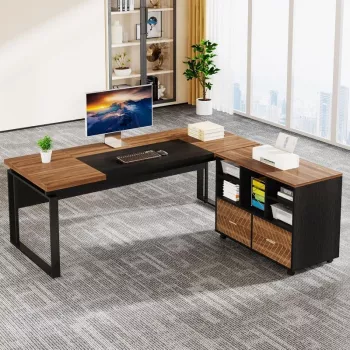
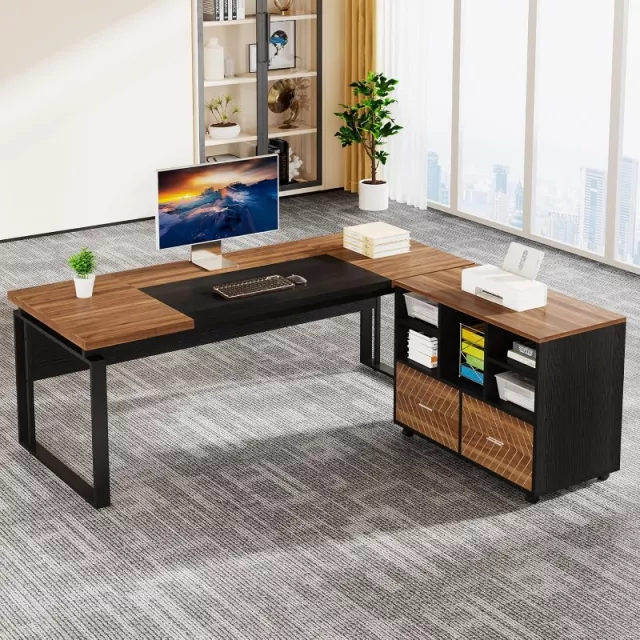
Modern L-Shaped Executive Desk with Reversible File Cabinet and Storage
A well-planned workspace balances surface area, organization, and room layout. This modern L-shaped executive desk pairs a spacious worktop with a reversible file cabinet and built-in storage, making it easier to keep daily essentials close while maintaining a clean, professional look in a home office or dedicated study.
If you’re upgrading from a small writing desk or a makeshift kitchen-table setup, an L-shape can feel like an instant reset: more room to spread out, clearer “zones” for tasks, and storage that supports a consistent end-of-day tidy-up.
What makes this desk a strong fit for busy workdays
- L-shaped footprint supports multitasking: keep computer work on one side while reserving the return for writing, planning, or reference materials.
- Executive-style surface presence: the larger profile anchors a room and creates a defined work zone—especially helpful in open-concept layouts.
- Storage-forward design: reduces desktop clutter by giving supplies, paperwork, and tech accessories a home.
- Modern profile: blends well with contemporary home offices, apartments, and upgraded spare-room setups without looking overly corporate.
Reversible file cabinet: layout flexibility that adapts to your room
One of the biggest advantages of this style is that the file cabinet can be positioned on either side. That small detail makes a big difference when you’re dealing with real-world obstacles like door swings, closet access, or the one outlet that’s actually usable.
- Reversible cabinet placement: supports right-handed or left-handed workflows—choose the side that feels natural for opening drawers and grabbing files.
- Works with different room shapes: set it into a corner, float it in the room for a more “executive” feel, or run it along a long wall.
- Shared-space friendly: helps you avoid blocking vents, windows, or walkways in multipurpose rooms.
- Planning tip: map the cabinet side based on where power outlets and cable routing will be simplest, so cords don’t cross your leg space.
Storage and organization zones
Storage is most useful when it’s intentional. Rather than treating every drawer as a catch-all, set a few simple “zones” so you can find things fast and reset your workspace in minutes.
- File storage: keeps paperwork, folders, and documents protected and easy to retrieve.
- Additional compartments: separate office supplies, tech accessories, and personal items so they don’t migrate onto the desktop.
- Simple zoning approach: a daily-use drawer (pens, notepad, charger), a weekly-use shelf (reference items, peripherals), and an archive file area (old projects, records).
- Add-ons that pair well: drawer organizers, label tabs for files, and a small desktop tray for in-progress items you don’t want to lose.
Space planning: getting the L-shape to work in real rooms
L-shaped desks shine when the layout is planned. Before committing to a cabinet orientation, take five minutes to measure and “walk” the space as if you’re already using it—rolling your chair back, opening drawers, and standing up to grab a book or printer paper.
- Measure key clearances: wall lengths, door swing clearance, and chair pull-back space before choosing the cabinet orientation.
- Keep pathways comfortable: aim for easy movement around the desk so the corner doesn’t feel cramped.
- Watch monitor glare: position screens perpendicular to windows when possible to reduce reflections.
- Cable planning: decide where a surge protector will live so cords stay off the floor and away from chair wheels.
Comfort and ergonomics for long sessions
A desk can support productivity, but comfort comes from setup. A few adjustments—monitor height, chair fit, lighting—can reduce fatigue during long calls, deep work sessions, or late-night study.
For additional ergonomics guidance, see the OSHA Computer Workstations eTool and the NIOSH ergonomics resources.
Feature overview
How the desk’s main elements support an organized workspace
| Element | Practical use | Why it matters day-to-day |
|---|---|---|
| L-shaped work surface | Separate computer tasks from writing, scanning, or device charging | Reduces pile-ups and keeps active projects visible without crowding the keyboard area |
| Reversible file cabinet | Place file access on the most convenient side for your room and dominant hand | Improves traffic flow and prevents drawers from opening into tight areas |
| File storage | Store folders, records, contracts, school paperwork, or home admin documents | Speeds up retrieval and supports a consistent filing habit |
| Additional storage | Keep stationery, notebooks, headphones, and peripherals sorted | Cuts down on visual clutter and makes the surface easier to reset after work |
| Corner return | Ideal for printers, a second monitor, or a reference station | Creates a dedicated spot for equipment so the main work area stays clear |
Styling ideas for a modern office look
Care and upkeep
In-stock picks to complete your setup
- Modern L-Shaped Executive Desk with Reversible File Cabinet and Storage
- Twin Size Upholstered Bed with LED Lights and Crown Headboard (a smart add for a guest-room office that doubles as a bedroom)
- Men’s Genuine Leather Cowboy Belt with Copper Buckle for Jeans
FAQ
How does the reversible file cabinet work with different room layouts?
The cabinet can be installed on either side of the L-shape, so the return faces the direction that best fits your room. Plan around outlets, door swings, and drawer clearance to keep walkways open and file access easy.
Will an L-shaped executive desk fit in a small home office?
Yes, if you measure wall lengths and allow enough space for your chair to slide back and for drawers to open fully. Corner placement usually saves space, and choosing the cabinet orientation that preserves walkways helps the room feel less crowded.
What’s the best way to organize the file cabinet for everyday use?
Keep active files in front and archives behind, use labeled folders, and reserve one section for supplies so paperwork doesn’t mix with small items. A quick 5-minute weekly reset—re-filing loose papers and clearing the top—keeps it functional.












Leave a comment