Nike Trend Cycles Explained: Hype, Drops & Restocks
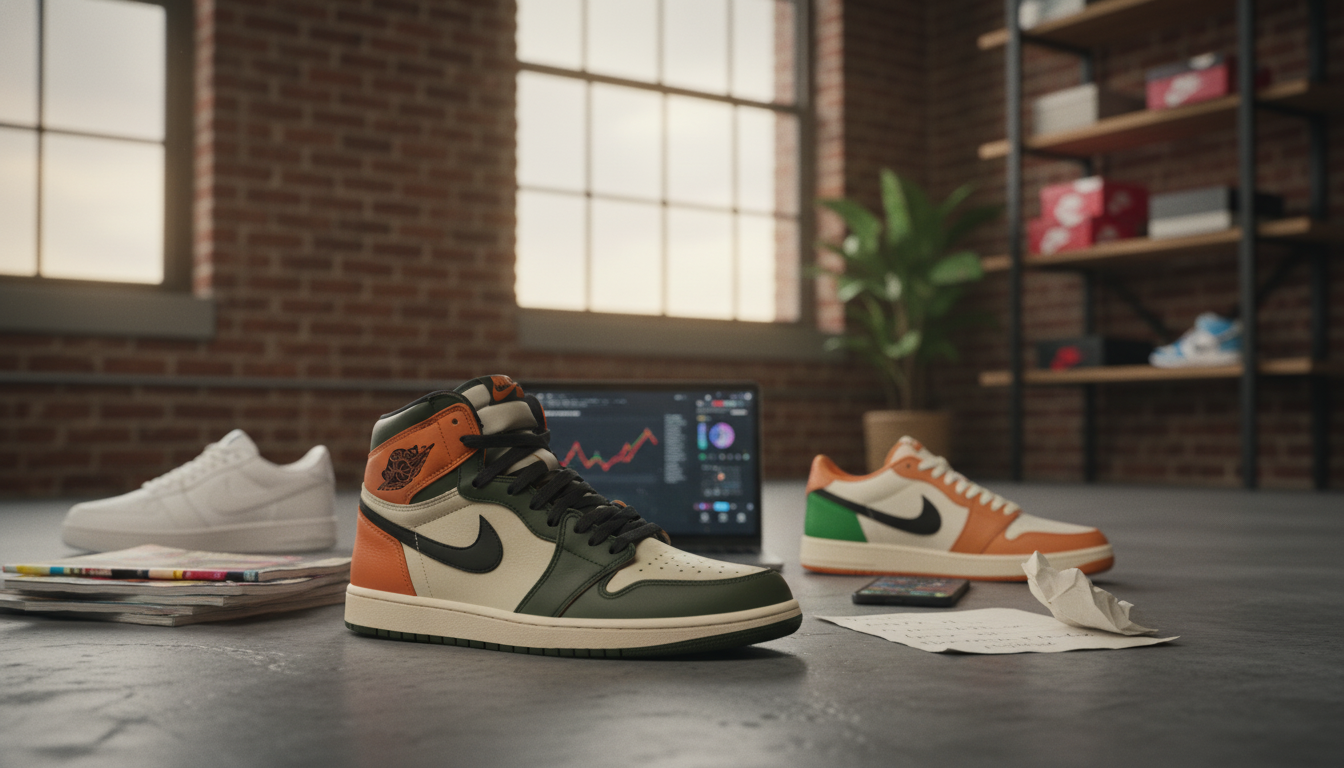
How Nike Trends Rise and Fall: From First Rumor to Cool-Down
Nike sneaker demand tends to move in recognizable waves: an early spark, a rapid hype build, a peak around release, and then either a long “classic” afterlife or a quick fade. Understanding the mechanics behind these swings helps collectors, casual buyers, and resellers make better timing decisions—whether the goal is to wear, hold, or trade. This guide breaks down the most common Nike trend cycle patterns, what drives limited-drop momentum, and how forecasting methods (including AI-style signals) can reduce guesswork. For more guidance, see Analysis of The Drivers Behind Nike’s Sneaker Market Decline and ….
The Nike trend cycle at a glance
Most Nike trends begin with a catalyst—an athlete moment, celebrity placement, a design revival, or a collaboration announcement. The “hype curve” is rarely powered by one thing; it’s typically the combined effect of supply limits, storytelling, community validation, and visibility on short-form video. For further reading, see Footwear Demand Cools: Can NIKE Keep Its Lead in the Sneaker ….
Another key trait: Nike models often re-enter the cycle through retros, fresh colorways, and platform shifts (running to lifestyle, skate to mainstream, performance to fashion). And when a trend “falls,” it doesn’t always vanish. Many silhouettes stabilize into steady classics, then spike again when culture rotates back.
Typical Nike trend cycle phases and what to watch
| Phase | What it looks like | Leading indicators | Common buyer mistake |
|---|---|---|---|
| Spark | Early buzz, low public awareness | Leak accounts, early seeding, small forum chatter | Waiting for mainstream confirmation and losing best pricing |
| Build | Rapid attention growth, content acceleration | Search trend lift, TikTok/IG Reels velocity, raffle chatter | Assuming every colorway will perform like the hero pair |
| Peak | Release-week frenzy, high resale spread | Sell-out speed, raffle demand, secondary market bid volume | Buying at top without an exit plan |
| Normalization | Prices retrace; demand consolidates | Restocks, wider availability, reduced content velocity | Overreacting and panic-selling a pair with long-term appeal |
| Afterlife | Either classic status or quiet fade | Cultural placement, repeat wear, retro cycles, collab re-ignition | Ignoring condition/size liquidity and holding the wrong variant |
Why some silhouettes keep coming back
Some models have “built-in gravity.” Heritage and recognizability matter: iconic lines like the Air Force 1, Air Jordan series, and Dunk can cool off in specific colorways yet remain relevant because the silhouette itself stays legible across generations.
Wearability also decides longevity. Neutral palettes, easy outfit pairing, and comfortable tooling help a shoe survive once the loudest hype moves on. Finally, story depth is a real advantage: pairs tied to sports milestones, city editions, or meaningful collaborations tend to rebound more reliably than a random color swap.
One more driver is the platform shift—when fashion suddenly favors a category. A running model can become a lifestyle staple when tech aesthetics trend; a skate silhouette can surge when a subculture hits the mainstream.
Limited drops, allocation, and the psychology of scarcity
Scarcity isn’t just “low stock.” It’s often amplified by uncertainty: unclear stock numbers, region-limited releases, staggered drops, and confusing launch calendars can increase perceived rarity. That perception alone can pull buyers into earlier phases of the curve.
Release mechanics matter, too. Raffles versus first-come-first-served changes the “effort cost,” which can raise desirability even if total inventory is not ultra-low. Restocks reshape the curve in a different way: they can soften resale prices short-term while strengthening mainstream adoption (more pairs on feet creates more ongoing visibility).
Collaborations add another layer. A strong collaborator can elevate a mid-tier silhouette overnight; weak storytelling can fail even with tight stock, especially if buyers sense the drop is “limited but forgettable.”
Signals that hype is building (and signals it is fading)
Building signals include accelerating social mentions, consistent outfit posts (not just unboxings), rising “want to buy” comments, and increasing raffle participation chatter. The key is continuity: one viral clip can spike attention without creating durable demand, so look for multi-day continuation across platforms.
Forecasting trend direction with data and AI-style methods
A practical forecasting approach combines a few lightweight data streams instead of trusting one dashboard. Start with demand proxies: movement on Google Trends for model names and nicknames, social velocity (posts per hour/day), and marketplace listing counts with sold-through rate. Pair those with supply context: number of retail partners, raffle volume, and evidence of restocks (retailer “coming soon” pages re-activating or repeated launch entries).
For official brand-side confirmations and announcements, Nike’s own channels can help anchor timelines (see Nike Newsroom). For market behavior context, broader resale research write-ups (like StockX Sneaker Market Data & Research) can help validate whether a spike is model-wide or just a single release.
Timing decisions: buy to wear, buy to hold, or buy to flip
Putting it all together: a repeatable checklist
Recommended reads and style add-ons
- How Nike Trends Rise and Fall – The Ultimate Guide to nike trend cycles explained, Sneaker Hype Patterns, Limited Drops & AI Forecasting
- Men’s Genuine Leather Cowboy Belt with Copper Buckle for Jeans
FAQ
How long does a Nike sneaker trend usually last?
It depends on the silhouette and supply. Many hype spikes last a few weeks around release, while “classic” models cycle over months or years with periodic revivals driven by new colorways, retros, or cultural moments.
Do restocks always kill resale value?
Not always. Restocks often soften prices in the short term by increasing supply, but they can also boost long-term mainstream demand—especially for wearable colorways that benefit from more people owning and styling them.
What are the most reliable early indicators that a pair will stay popular?
Look for sustained engagement across multiple platforms, styling content beyond unboxings, a credible narrative or collaborator, and a colorway that works in everyday outfits. Those factors tend to outlast single-day viral spikes.














Leave a comment