Printable Pet First-Aid Cheat Sheet for Emergencies
Must-Know Pet First-Aid Cheat Sheet: A Printable Emergency Guide for Pet Owners
Pet emergencies can escalate quickly, and clear steps matter when stress is high. A printable first-aid cheat sheet keeps essential actions, red flags, and vet-call guidance in one place—so care can start immediately while professional help is arranged. This guide explains what to include, how to use it safely, and how to prepare a simple home kit for common situations.
When a Cheat Sheet Helps Most
A well-made pet first-aid cheat sheet earns its keep during moments when minutes matter and decisions feel rushed.
- Time-sensitive situations: bleeding, choking, breathing trouble, heat injury, seizures, suspected poisoning
- Multiple caregivers: family members, pet sitters, neighbors—consistent steps reduce mistakes
- Travel and outdoor time: hikes, parks, camping, road trips, hotel stays
- After-hours decision support: quick “go now” red flags vs. concerns that can wait for the next appointment
First Actions to Take in Any Emergency
Use these as your default sequence while you contact a veterinarian or emergency clinic.
- Stay safe first: remove hazards (traffic, other animals, electrical cords, broken glass). Use a muzzle only if needed and safe—never muzzle a vomiting pet or one struggling to breathe.
- Do a quick check: consciousness, breathing, and severe bleeding. Keep handling minimal if trauma (hit-by-car, fall) is suspected.
- Call a professional early: contact your veterinarian or an emergency clinic while another person starts basic care.
- Keep the pet warm and calm: wrap in a blanket; reduce noise/light; avoid food and water unless a professional advises it.
- Prepare transport: use a sturdy carrier for cats/small dogs; a board/blanket stretcher for larger dogs. Keep head/neck aligned if injury is possible.
What the Printable Cheat Sheet Should Include
The best printout is short, scannable, and customized to your pet. Aim for one page (front/back if needed) with fill-in areas.
- Emergency contacts: primary vet, nearest 24/7 ER, pet poison hotline, taxi/rideshare backup, and a nearby friend/neighbor
- Pet profile: name, species/breed, age, weight, microchip ID, allergies, chronic conditions, current medications, vaccination status
- Step-by-step basics: controlling bleeding, safe restraint, shock signs, safe transport notes
- Clear “go now” red flags: labored breathing, pale/blue gums, collapse, uncontrolled bleeding, repeated vomiting, distended abdomen, suspected toxin ingestion
- Space for notes: time symptoms started, what was eaten, meds given (dose/time), photos of vomit/stool or the suspected toxin label
Emergency Contacts & Pet Info (Fill-In Template)
| Item | Details to Fill In |
|---|---|
| Primary veterinarian | Clinic name, phone, address |
| Nearest 24/7 emergency vet | Phone, address, driving time |
| Pet poison help | Hotline name, phone, membership/payment notes |
| Pet details | Weight, age, conditions, medications, allergies |
| Transport backup | Neighbor/friend contact, rideshare plan |
Quick Care: Common Scenarios and Safer Steps
These are low-risk actions that can help stabilize your pet while you arrange professional care.
Bleeding and wounds
- Apply firm, direct pressure with clean gauze or cloth.
- Don’t remove soaked layers; add more on top and keep pressure steady.
- Use a bandage wrap snug (not tight). If toes swell or feel cool, loosen it.
- Seek veterinary care for deep wounds, punctures, animal bites, or bleeding that doesn’t stop promptly.
Choking or gagging
- Watch for panic, pawing at the mouth, noisy breathing, or blue/pale gums.
- Avoid blind finger sweeps (they can push an object deeper or cause injury).
- If an object is visible and easy to grasp, remove it carefully—then head to a vet if breathing was affected.
- If breathing is impaired, treat it as an emergency and go immediately.
Heat injury
- Move to shade or air conditioning right away.
- Offer small sips of water if your pet is alert and able to swallow normally.
- Cool with lukewarm water over the body plus a fan; avoid ice baths.
- Even if your pet seems to improve, get veterinary guidance—heat injury can worsen after the fact.
Seizures
Suspected poisoning
- Do not induce vomiting unless a veterinarian or poison professional instructs it.
- Save packaging or a plant sample; note the time and estimated amount.
- Call promptly for guidance. Helpful resources include ASPCA Animal Poison Control and your nearest emergency clinic.
Home First-Aid Kit Essentials to Pair With the Printout
For more general guidance on what to do (and what not to do) during emergencies, review the American Veterinary Medical Association (AVMA) first-aid tips and consider a certified course such as American Red Cross Pet First Aid.
How to Use the Cheat Sheet Without Replacing Veterinary Care
Printable Guide: What’s Included and Where to Keep It
Recommended printables and pet essentials
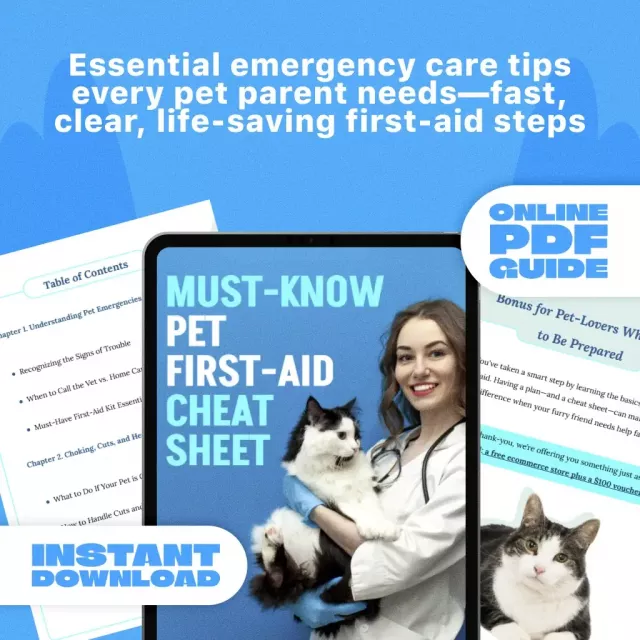
- Must-Know Pet First-Aid Cheat Sheet (Printable Emergency Guide) — a quick-reference format you can print and post at home or pack for trips.
- Large Dog Slicker Brush & Comb Set for Doodles, Poodles and Long Coats — not an emergency item, but keeping coats detangled helps you spot skin issues, ticks, hot spots, and small wounds sooner.
FAQ
Should vomiting ever be induced at home after a pet eats something dangerous?
Generally no—only induce vomiting if a veterinarian or pet poison professional specifically instructs it. Some substances (and some pet conditions) make vomiting risky, so call immediately with the product, amount, and time.
What are the signs that mean an emergency vet visit is needed right away?
Seek emergency care for breathing difficulty, collapse, pale/blue gums, uncontrolled bleeding, repeated vomiting, seizures lasting more than 5 minutes (or clusters), suspected poisoning, severe pain, a bloated/distended abdomen, or inability to urinate.
Where should a printable first-aid cheat sheet be kept for fastest access?
Keep copies in multiple places: on the fridge, near the leash/harness, in the car (glove compartment), and inside your pet travel kit. Also store a phone photo or PDF so you can pull it up while calling the emergency clinic.















Leave a comment